
Making mămăligă takes me straight back to my grandfather's kitchen. He had a ceaun - a heavy, round-bottomed Romanian pot - that lived on the stove and came out whenever mămăligă was on the menu. He'd pour the cornmeal in slowly, stir without stopping, and the whole house would fill with that warm, earthy smell.
We'd eat it with chicken and garlic stew my grandmother made, and whatever stuck to the bottom of the pot, he'd pour milk over and heat up. That was our dessert. I've never forgotten the taste of those burnt bits with sweet milk.
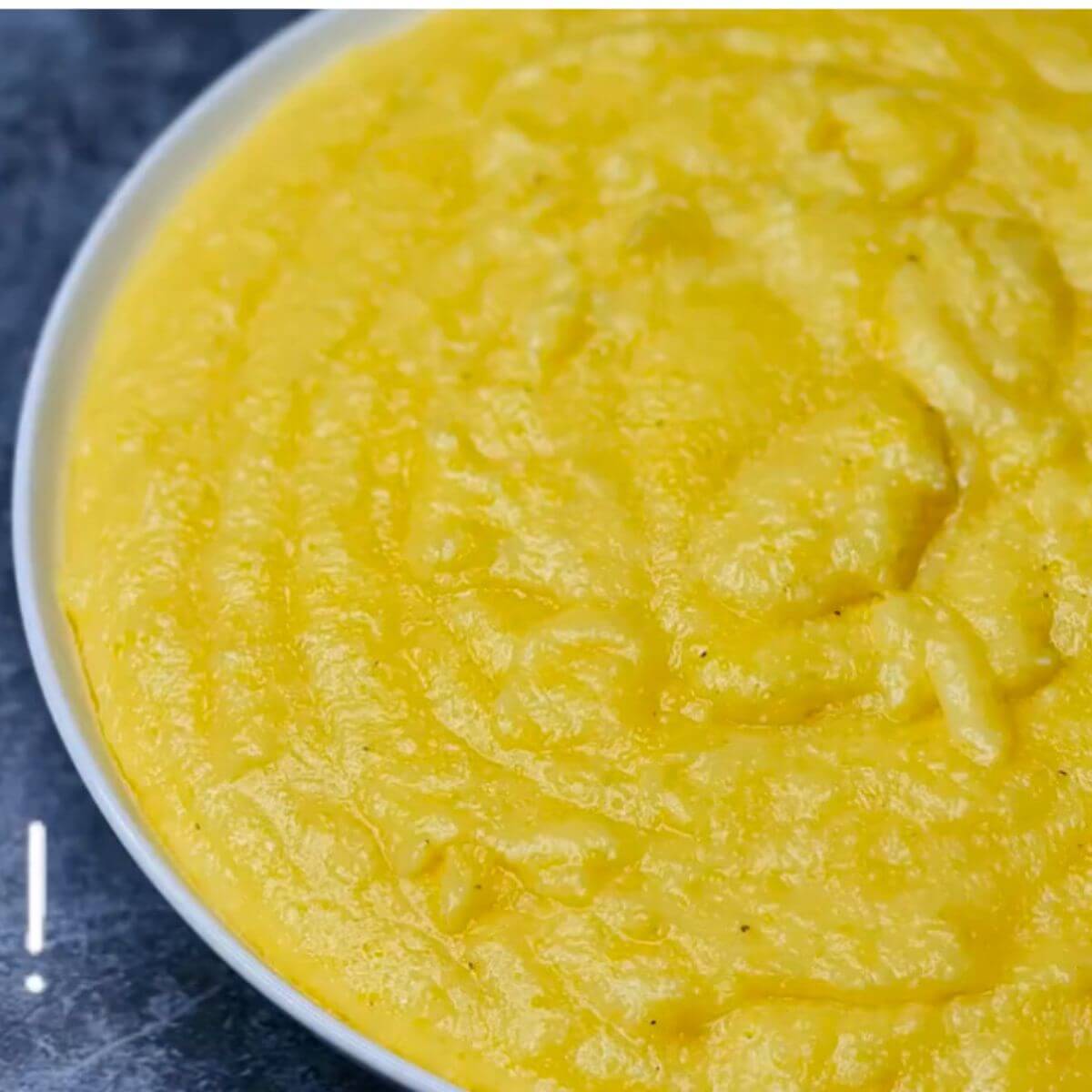
🇷🇴 Romanian Cuisine | 🌽 Gluten-Free
This traditional Romanian polenta (mămăligă) is made with four ingredients: cornmeal, water, salt, and butter. The technique and the ratio are what make the difference - and I'll walk you through both below.
📷 Recipe Snapshot
📌 Recipe: Traditional Romanian Polenta (Mămăligă) Recipe
⏲️ Time: 25 minutes
👥 Serves: 4
🌏 Cuisine: Romanian
📝 Quick Summary: A classic Romanian side dish made with cornmeal, water, salt, and butter. Simple, hearty, and perfect alongside stews, grilled meats, cheese, or sour cream.
🌟 Main Ingredients: Corn grits, water, salt, butter or olive oil.
💡 Pro Tip: The ratio determines the texture - 4 cups water to 1 cup cornmeal for soft, 3 cups to 1 for firm and sliceable.
💡 Summarize and save this recipe on
Jump to:
- 📷 Recipe Snapshot
- 💡 Summarize and save this recipe on
- 🌽 What Is Mămăligă?
- 💗 Why You'll Love This Recipe
- 🥘 Ingredients
- 👩🍳 How To Make Traditional Romanian Polenta - Mămăligă
- How to Make Firm, Sliceable Mămăligă (Traditional Method)
- 🧀 Mămăligă cu Brânză (Polenta with Cheese and Sour Cream)
- What to Do with Leftover Mămăligă
- 🧺 Storage Tips
- ❓Traditional Romanian Polenta - Mămăligă FAQs
- Serve Polenta (mămăligă) With
- 📖 Recipe
- 💬 Comments
📐 The Ratio - Soft vs Firm
The ratio of water to cornmeal determines everything about the final texture.
- Soft mămăligă (creamy, spoonable): 4 cups water to 1 cup cornmeal. Serve straight from the pot with sour cream, cheese, or stew.
- Firm mămăligă (sliceable, traditional): 3 cups water to 1 cup cornmeal. Cook longer, then turn out onto a board. Slice with string.
🌽 What Is Mămăligă?
Mămăligă is Romanian cornmeal porridge - the Romanian equivalent of what Italians call polenta, though the two are not the same dish. Romanian mămăligă is traditionally cooked thicker and firmer, firm enough to slice and hold its shape on a wooden board. Italian polenta is more often served creamy and loose.
The cornmeal matters too. Romanian mălai is medium-ground yellow cornmeal, coarser than the fine polenta flour used in Italy. If you can find it at an Eastern European grocery, use it. Bob's Red Mill coarse corn grits is the closest US equivalent.
In Romania, mămăligă was a bread substitute for centuries. Farm workers would take thick slices into the fields for lunch alongside slanina (pork fat), cheese, and raw onion. In the countryside today, it's still most commonly served with sarmale, stews, fried eggs and sour cream, or simply with cheese. In the Danube Delta, mămăligă is the traditional side for fried fish - my cornmeal fried fish pairs with it exactly that way.
💗 Why You'll Love This Recipe
Just three ingredients. Cornmeal, water, salt. The butter goes in at the end. That's the whole recipe.
No special equipment needed. A heavy-bottomed pot and a whisk. Romanians made this with a wooden stick for generations - a ceaun is traditional, but a Dutch oven works just as well.
Texture is yours to control. More water and you get a loose, creamy mămăligă for serving alongside stew. Less water and it firms up enough to slice, grill, or fry the next day.
It gets better the next day. Leftover mămăligă sliced cold and pan-fried in butter is one of the best things you can make with yesterday's dinner.
🥘 Ingredients
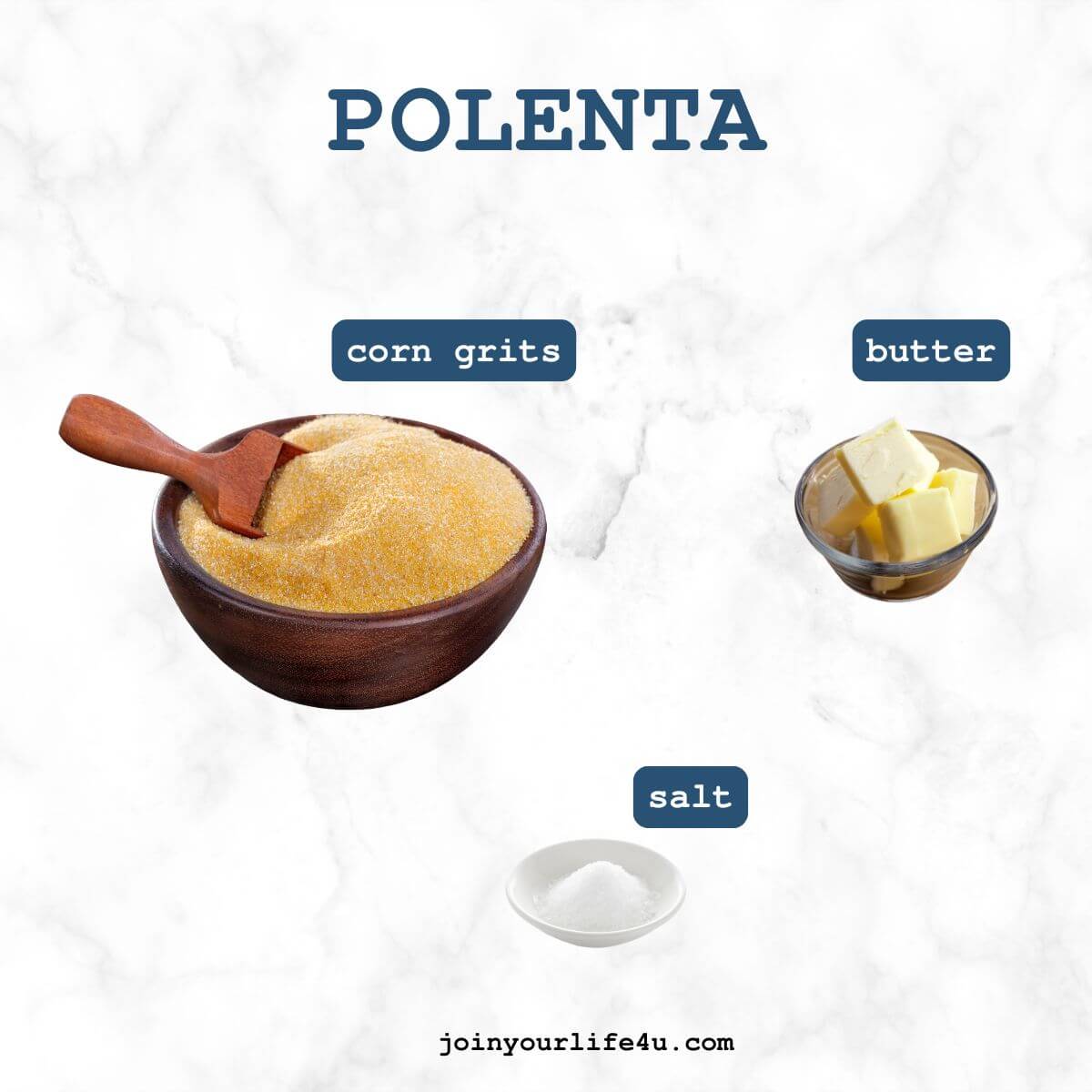
*See the recipe card for full information on ingredients and quantities.
- Cornmeal (mălai) - Use medium-ground yellow cornmeal, not fine polenta flour. Fine cornmeal turns into porridge and loses the texture that makes mămăligă what it is. In Romania, we use mălai extra - look for it at Eastern European grocery stores. In the US, Bob's Red Mill coarse corn grits is the closest equivalent.
- Water - Plain water is traditional. Some people use half water, half milk for a richer result - it works, but gives you something closer to American grits than mămăligă.
- Butter - Unsalted, stirred in at the end off the heat. Don't add it while the heat is still high or it separates rather than emulsifying into the polenta. It's optional - traditional mămăligă doesn't always include it - but it makes the texture smoother.
👩🍳 How To Make Traditional Romanian Polenta - Mămăligă
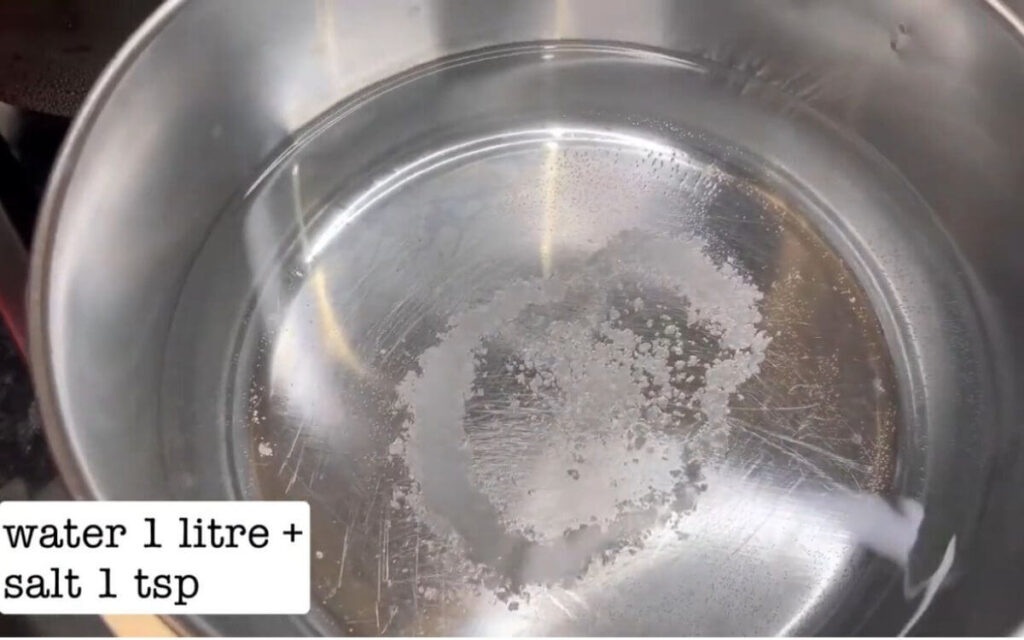
Step 1: Boil the Water: Bring 4 cups of water to a boil in a pot. Add salt and stir until dissolved. Make sure your pot is big enough for the polenta to thicken.
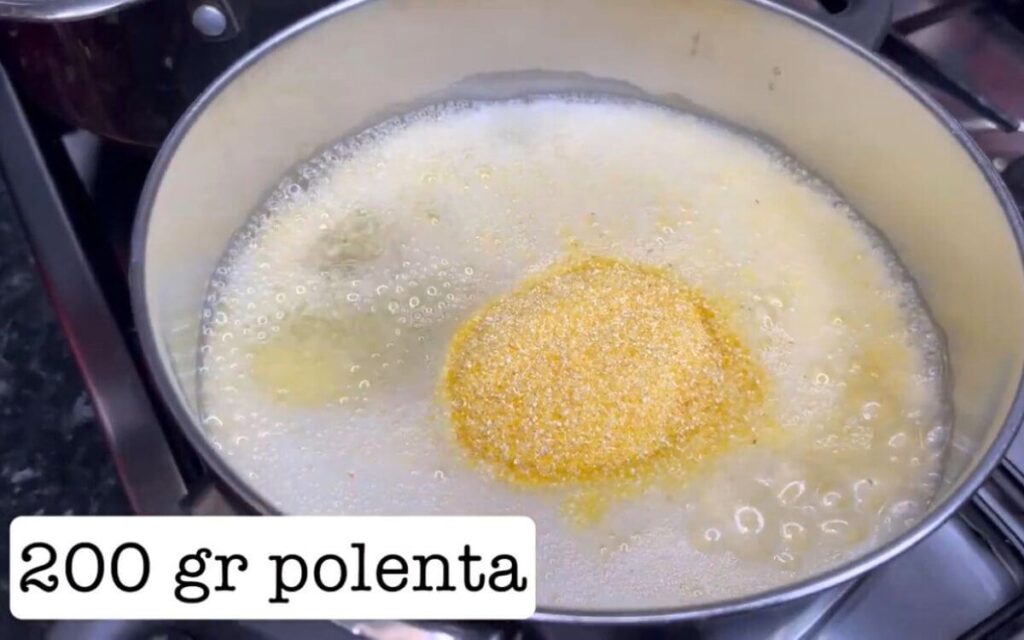
Step 2: Add the Cornmeal: Slowly pour in the cornmeal, stirring constantly with a whisk to avoid lumps. Once mixed, reduce the heat to medium-low.
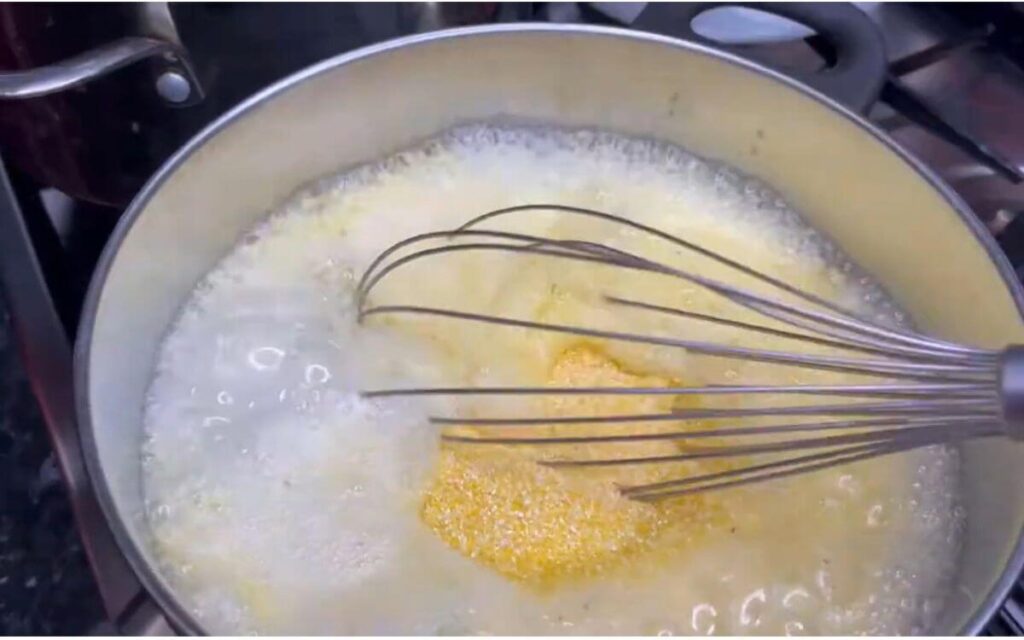
Step 3: Simmer and Stir: Let it cook for 15-20 minutes, stirring occasionally to prevent sticking.
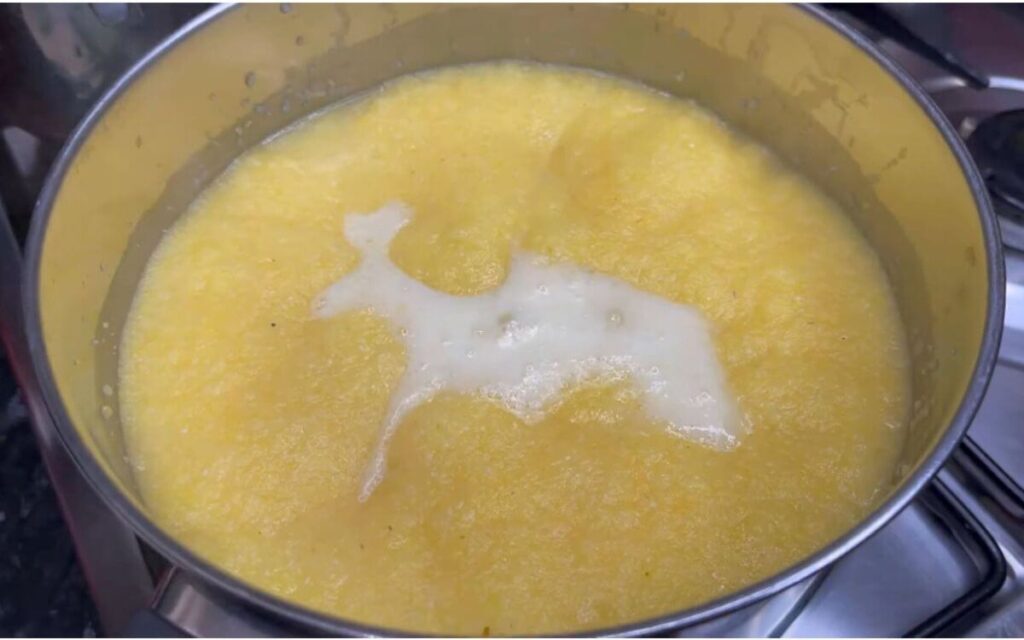
Step 4: Cover if Needed: If it starts splattering, lower the heat and cover with a lid.
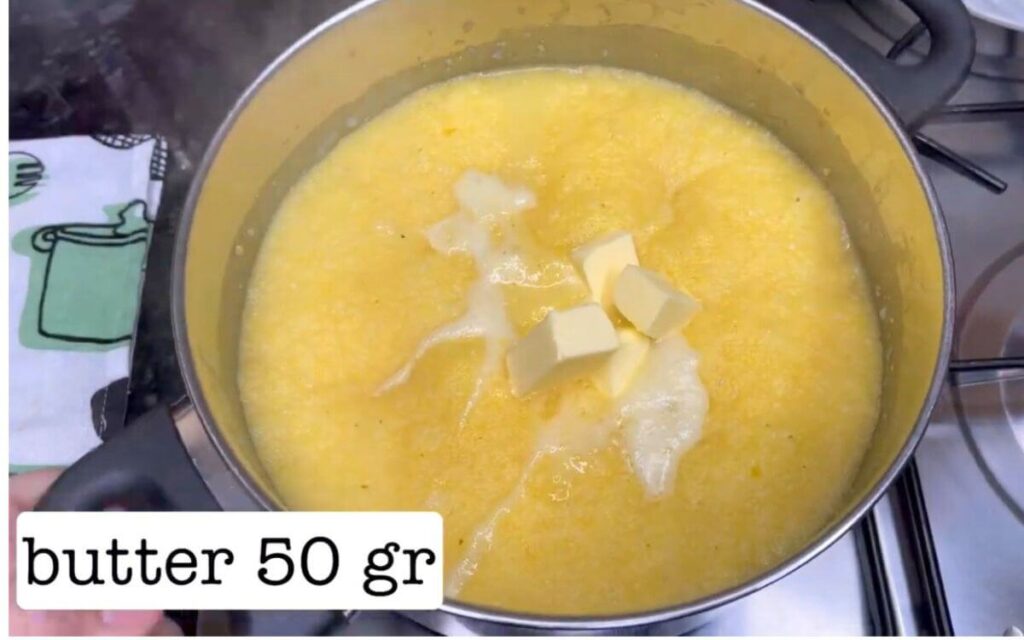
Step 5: Add the Butter: Stir in butter or olive oil until melted and smooth. Taste and adjust salt if needed.
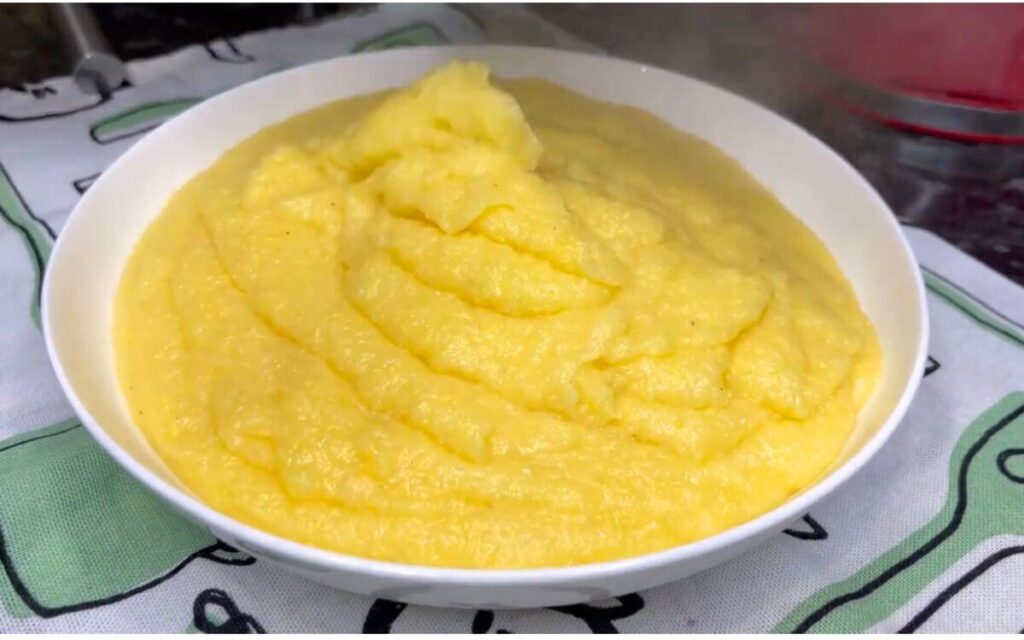
Step 6: Serve: Pour the polenta onto a board or serving dish. Let it set for 5-10 minutes before slicing, or serve hot straight from the dish.
*See the recipe card for detailed instructions.
How to Make Firm, Sliceable Mămăligă (Traditional Method)
After the butter is stirred in, turn off the heat and leave the pot covered for 10 minutes. Turn the heat back on for one minute, then switch it off again. Place a wooden board over the top of the pot and flip the whole thing upside down. The steam inside releases the mămăligă cleanly, and it slides out in one piece, holding its shape.
Slice it with string, not a knife - that's the Romanian way. A knife drags and sticks; a piece of string cuts cleanly through warm mămăligă without disturbing the shape.
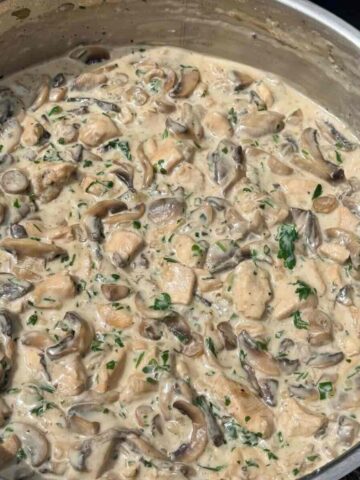
This simple cornmeal dish is incredibly versatile, but my absolute favorite way to serve it is alongside a warm plate of Romanian chicken and mushroom stew to soak up all that rich sauce.
🧀 Mămăligă cu Brânză (Polenta with Cheese and Sour Cream)
The most traditional way to serve mămăligă in Romania is with brânză (Romanian sheep's cheese or feta) and smântână (sour cream), often with a fried egg on top.
To make it: cook the mămăligă to a soft consistency (4:1 water-to-cornmeal ratio). Spoon into bowls, top with crumbled telemea or feta, a generous spoonful of full-fat sour cream, and a fried egg if you want a full meal. The egg yolk breaks into the hot mămăligă and mixes with the sour cream - it's one of those combinations that needs no improving.
For a baked version (mămăligă la cuptor), layer slices of firm mămăligă in a baking dish with cheese and sour cream between each layer. Bake at 375°F for 20 to 25 minutes until golden on top.
What to Do with Leftover Mămăligă
- Polenta Fries: Cut leftovers into fry-shaped pieces, season with herbs and spices, and bake or fry until crispy. They make a great alternative to regular fries and are perfect for dipping in your favourite sauce. To ensure the fries stay crispy, you can lightly coat them in a bit of cornstarch before cooking
- Mini Polenta Pizzas: Spread leftovers into rounds, then top with your favourite pizza toppings-cheese, tomato sauce, olives, or any other fixings-and bake until the polenta is golden and the toppings are bubbly. This makes for a fun, gluten-free pizza alternative
- Grilled or Fried Polenta Slices: Slice leftovers into thick rounds and grill or fry them until crispy on the outside and soft on the inside. These slices can be used as a base for other dishes like vegetable stacks, topped with sautéed mushrooms, or used as a side dish for meats and stews
- Use leftover cornmeal in our Romanian alivenci cottage cheese bread for dessert!
🧺 Storage Tips
- Refrigerator: Store leftovers in an airtight container for up to 3 days.
- Reheat: Heat on the stove with a splash of water or milk to loosen it up.
- Freezing: Pour into a lined dish, let it set, then slice and freeze for up to 1 month.
❓Traditional Romanian Polenta - Mămăligă FAQs
No. Both use cornmeal, but Romanian mămăligă is traditionally cooked much thicker and firmer - firm enough to slice and hold its shape on a board. Italian polenta is more often served creamy and loose. The cornmeal is different too: Romanian mălai is medium-ground and coarser than the fine flour used in Italian polenta.
The cornmeal was added too fast or you stopped whisking while pouring. Once lumps form they don't cook out. Pour the cornmeal in a slow, thin stream while whisking continuously - the whole time it goes in, not just the beginning.
It depends on how you're serving it. For a soft, creamy version to eat with stew or cheese, use a 4:1 ratio (4 cups water to 1 cup cornmeal). For a firm, sliceable version to turn out on a board, use a 3:1 ratio (3 cups water to 1 cup cornmeal). Both are traditional - the thickness just depends on the occasion.
You can, but the texture is different - smoother and softer, without the slight bite that traditional medium-ground mălai gives. Instant polenta also cooks in 5 minutes rather than 20. It works in a pinch but it's not the same dish.
A knife drags through warm mămăligă and sticks to the surface, pulling the shape apart. A piece of string cuts cleanly without disturbing it. It's a practical tradition that actually works better than a knife.
Serve Polenta (mămăligă) With


Tried this recipe? Give it a star rating below! ⭐⭐⭐⭐⭐
HUNGRY FOR MORE? Subscribe to my newsletter and follow along on Facebook, Pinterest, and Instagram for the latest updates.
📖 Recipe

How to Make Traditional Romanian Polenta Recipe (Mămăligă)
Video
Equipment
- Heavy-bottomed pot
- Sturdy spoon or metal balloon whisk
- Measuring cups or a digital kitchen scale
Ingredients
- 1 cup corn grits
- 4 cups water
- 1 teaspoon salt
- 4 tablespoons butter or olive oil
Instructions
- Boil the Water: Bring 4 cups of water to a boil in a heavy-bottomed pot. Add the salt and stir to dissolve. Make sure the pot is large enough to handle the polenta as it thickens.4 cups water, 1 teaspoon salt
- Add the Cornmeal: Slowly pour in the cornmeal, stirring constantly with a metal balloon whisk to prevent lumps. This step is crucial for achieving a smooth texture. Once the cornmeal is fully incorporated, reduce the heat to medium-low.1 cup corn grits
- Cook and Stir: Let the polenta simmer gently, stirring occasionally with a wooden spoon or spatula to prevent sticking. Cook for 15-20 minutes, or until the mixture is thick and creamy. If it starts to bubble and splatter, lower the heat slightly.
- Add the Butter: Stir in the butter or olive oil until melted and fully combined. This adds a silky richness to the polenta. Taste and adjust the salt if needed.4 tablespoons butter
- Serve: Pour the polenta onto a wooden board or into a serving dish, using a spatula to scrape it from the pot. Smooth the top if desired. Let it set slightly for 5-10 minutes before slicing, or serve it hot straight from the dish.
Explore More with AI
Notes
- The ratio determines the texture - 4:1 water to cornmeal for soft, 3:1 for firm and sliceable.
- Pour the cornmeal slowly in a thin stream while whisking continuously. Stopping or pouring too fast causes lumps that won't cook out.
- Add butter off the heat. High heat makes it separate rather than emulsify into the polenta.
- It's done when it pulls away cleanly from the sides of the pot - not just when the timer goes off.
Lora says
I really enjoy polenta and really liked this Romanian version. Perfect for a cold fall evening!
Claudia-Cristina Ciorteanu says
Cold evenings and mămăligă go together perfectly. That's exactly when Romanians reach for it too.
Liz says
This was a delicious polenta recipe! It was the perfect way to shake up our side dish routine. We all enjoyed it!
Claudia-Cristina Ciorteanu says
Shaking up the side dish routine is exactly what this is for. Really glad everyone at the table liked it!
Ashley says
Comfort food at its best! I didn't realize authentic polenta was so easy to make. Can't wait to have it again!
Claudia-Cristina Ciorteanu says
Authentic polenta being this straightforward always surprises people the first time. The ratio is really all there is to it. Hope you make it again soon!
Sonja says
I didn't realise polenta is that easy to make! I had it as a side with some stew and it was so lovely!
Claudia-Cristina Ciorteanu says
Polenta and stew is the combination it was made for. Really glad you tried it!
Paula says
I've had polenta before, but never tried to make it on my own. This was a great recipe to follow, I found it easy to make and really enjoyed it!
Claudia-Cristina Ciorteanu says
First time making it and it worked out well — that's the best outcome. Thank you for giving it a go!
Beverly says
This recipe was so easy and worked exactly as written!
Claudia-Cristina Ciorteanu says
Exactly as written is always the goal. Thank you!
Razvan says
This worked exactly as written, thanks!
Claudia-Cristina Ciorteanu says
Thank you for trying it!
Cristina says
Mămăligă is such a staple in Romanian cooking! This traditional polenta recipe brings back so many memories—simple, hearty, and perfect with cheese or sour cream. Love how authentic yours looks!
Claudia-Cristina Ciorteanu says
Mămăligă with cheese and sour cream is hard to beat. So glad it brought back good memories — that's exactly what it should do.
Genevieve says
Romanian polenta looks delicious and easy to make!
Claudia-Cristina Ciorteanu says
It really is — and much more forgiving than most people expect. Hope you try it!
Swathi says
Traditional Romanian polenta is so yummy. Thanks for introducing me to this delicious dish.
Claudia-Cristina Ciorteanu says
So happy it was a good introduction to it. It's one of those dishes that becomes a regular once you've made it once.
Lathiya says
I love a good polenta and I'm happy that I found one. I also loved how you gave recipes to try with leftover polenta. That was really helpful.
Claudia-Cristina Ciorteanu says
The leftover ideas are honestly some of the best uses — pan-fried slices the next morning are hard to beat. Glad that section was useful!
Ieva says
Thank you for the recipe - it's a great one to serve with cacciatore chicken. Polenta turned our silky smooth 🙂
Claudia-Cristina Ciorteanu says
With cacciatore chicken that's a brilliant pairing. Silky smooth is exactly what you want — sounds like you got the ratio right first time.
Juyali says
Tried this recipe, and loved how creamy it got with the butter—definitely making it again!
Claudia-Cristina Ciorteanu says
The butter at the end is what does it. Glad it turned out well!
Sonja says
Never made Romanian polenta before and was amazed how easy it was. Super satisfying too. Added some cheese as suggested and it was comfort food at its best.
Claudia-Cristina Ciorteanu says
Cheese on top is always the right call. Comfort food at its best is exactly right.
Nora says
Easy and delicious, it makes it the perfect side dish!
Claudia-Cristina Ciorteanu says
Thank you! Simple and reliable is everything you want from a side dish.