
If you've never tried fasole bătută, let me introduce you to Romania's answer to hummus - and I'd argue it's even better. This Romanian bean dip is smoky, garlicky, and impossibly creamy, with sweet caramelised onions blended right in.
My version does something no other recipe does - instead of serving the onion topping separately, I blend everything and bake it. The result is a deeply flavoured dip with a beautiful golden crust on top, served warm straight from the oven.

Ready in 30 minutes, naturally vegan, gluten-free, and high in plant-based protein, but not suitable for keto or low-carb diets. Serve it with crusty bread, pita, or fresh vegetables and watch it disappear.
📷 Recipe Snapshot
📌 Recipe: Romanian Bean Dip with Caramelised Onions (Fasole Bătută)
⏲️ Time: 30 minutes
👥 Serves: 4
🌏 Cuisine: Romanian
📝 Quick Summary: A creamy Romanian bean dip blended with garlic, tomato, and smoked paprika, then baked with caramelised onions until golden. Serve warm with crusty bread, pita, or fresh vegetables.
🌟 Main Ingredients: Kidney beans, olive oil, onion, garlic, chopped tomatoes, smoked paprika, salt, and pepper.
💡 Pro Tip: Use the liquid from the canned beans instead of water when blending. The starch helps make the dip extra smooth and creamy.
💡 Summarize and save this recipe on
Jump to:
Oscar says
 "Loved this bean dip recipe, I could eat the whole thing, it's so good. Adding the tomato juice to it is a game changer, thanks for the recipe."
If you're putting together a larger spread, my Easy No-Cook Hummus Platter is another simple option...
WHAT IS FASOLE BĂTUTĂ?
The Romanian Bean Dip - Fasole bătută means "beaten beans" in Romanian, also known as fasole frecată or fasole făcăluită. It is Romania's equivalent of hummus - a smooth, creamy bean dip made from blended beans, garlic, and olive oil, topped with caramelised onions cooked in tomato paste and smoked paprika.
You will find it everywhere in Romania - in homes, restaurants, and on every holiday table. It is particularly popular during Orthodox Lent before Easter - a 40-day fasting period when meat, dairy and eggs are all avoided. Along with this Romanian bean dip, traditional Lenten dishes like roasted eggplant spread and vegan cabbage soup are staples on every Romanian table during this time. Because it is entirely plant-based, fasole bătută has been a cornerstone of Romanian fasting cuisine for centuries.
The name comes from the traditional method - before food processors existed, Romanian cooks would beat the beans by hand with a fork until smooth. Today, a blender does the job in minutes.
💗 Why You'll Love This Recipe
- Everything blended and baked together - because nobody should miss out on those caramelised onions! Every bite has the full flavour of the dish, not just plain white beans.
- Ready in 30 minutes using canned beans
- Works with any beans - kidney, cannellini, navy, butter beans
- Vegan, gluten-free, dairy-free and high in plant protein
- Perfect for Lent, Veganuary, BBQs and parties
- Tastes even better the next day
- Baked in the oven - the top caramelises beautifully as it bakes, unlike any other version.
🥘 Ingredients
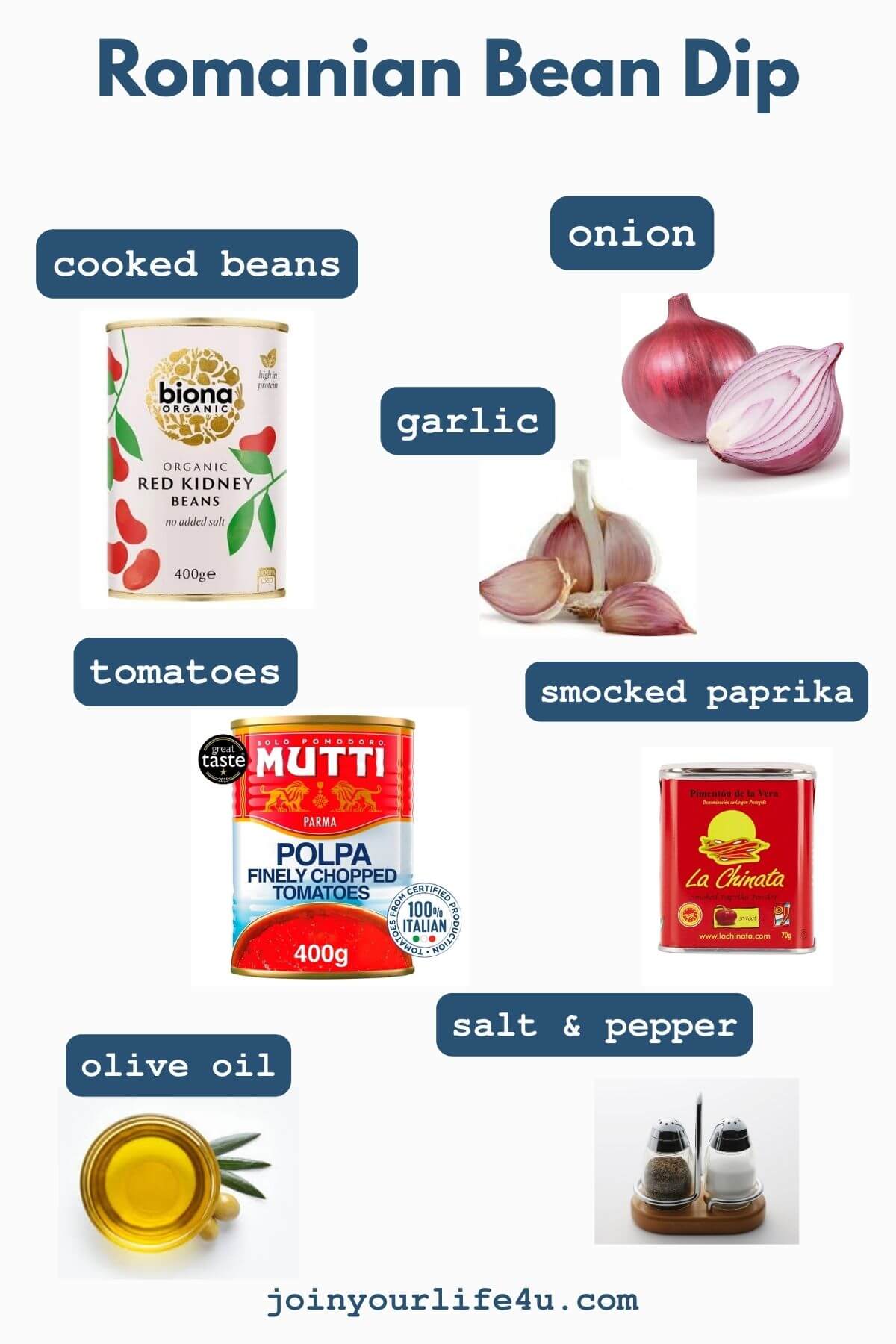
*See the recipe card for full information on ingredients and quantities.
Cooked Kidney Beans: Traditionally made with white beans. Cannellini, navy, or butter beans are closer to the classic version. If using canned, use the whole contents.
Olive Oil: Use a neutral olive oil or sunflower oil, which is very common in Romanian cooking.
Onion: Dice thinly for caramelising.
Garlic: Fresh garlic is best here; crush well for a smooth dip.
Chopped Tomatoes: You can use passata, fresh tomatoes, grated or tomato juice, anything tomato will work. If using canned whole tomatoes or chunky, make sure to blend them or cut then in small pieces. You can even use 2-3 tbs of tomato paste for the entire recipe.
How to Make This Romanian Bean Dip with Dry Beans
This recipe uses 800g (2 cans) of beans. If starting from dry, you need approximately 350g of dried beans. You can cook more and also prepare this Traditional Romanian Bean Soup (Ciorba De Fasole).
- Soak overnight in cold water for at least 8 hours - the beans will double in size.
- Drain, rinse, and cook in fresh salted water over medium heat for 1 to 2 hours until completely soft.
- If you have a pressure cooker, 45 minutes is enough.
- Reserve a cup of the cooking liquid to use in place of the canned bean liquid - it makes the dip even silkier.
💡 Cooking times vary depending on the bean variety. Always test by pressing a bean between your fingers - it should crush easily when done.
🥗 Serving Suggestions
- Traditional Romanian style - spread on a thick piece of homemade Romanian House Bread (Paine de casa) served with pickles on the side. As part of a Romanian mezze board alongside grilled eggplant salad and fish roe salad.
- Modern ideas - pita bread, pita chips, carrot and cucumber sticks, crackers, or as a spread in wraps instead of hummus.
- Best occasions - Orthodox Lent, Veganuary in January, summer BBQs, and weekly meal prep, or whenever you feel like it.
- Veggie bites: Like these simple quinoa-baked fritters or cheesy leek and potato patties.
💭 Expert Tips
- Use the bean liquid - it contains starch that makes the dip silkier.
- Don't skip the baking - this is where the flavour deepens.
- Use smoked paprika, not sweet - the smokiness is essential.
- Blend for at least 2 minutes for the smoothest result.
- Make it the day before - the flavour improves overnight.
Looking for more plant-based ideas? Browse my easy vegan recipes or my Meatless Friday dinner ideas.
❓Romanian Bean Dip with Caramelised Onions FAQs
Romanian bean dip is most commonly eaten during Orthodox fasting periods - particularly the 40-day Lenten fast before Easter, when meat, dairy and eggs are all avoided. It also appears at Christmas, on fasting Wednesdays and Fridays throughout the year, and as an everyday snack spread on bread. If you visit a traditional Romanian restaurant, you will almost always find this bean dip on the menu.
Yes - and this is actually how Romanian bean dip was made for centuries by our grandmothers. Cook the beans until very soft, then mash them with a fork or potato masher, pressing out any skins as you go. It takes more effort but gives a slightly more rustic, textured result that many Romanians prefer. For the smoothest possible finish, press the mashed beans through a wide mesh sieve.
They are very similar in concept - both are blended bean dips with garlic and olive oil - but this Romanian bean dip has a completely different flavour profile. Where hummus uses tahini and lemon for brightness, Romanian bean dip uses smoked paprika, tomato and caramelised onion for depth and smokiness. My version also adds a baking step, which no hummus recipe does, giving a golden crust and a far more complex, roasted flavour.
Same dish, different name depending on where in Romania you are from. Fasole bătută means "beaten beans," fasole frecată means "rubbed beans," and fasole făcăluită is another regional variation - all refer to the same traditional Romanian bean dip. The ingredients and method are identical; only the name changes from one region to the next.
Store in an airtight container in the fridge for up to 5 days - the flavour actually improves after day one as everything deepens together. To freeze, cover the surface with a thin layer of olive oil before sealing to prevent it from drying out, then freeze for up to 3 months. Reheat gently in the microwave with a splash of water, or covered in a low oven at 160°C for 15 minutes.
More Recipes You'll Love




Tried this recipe? Give it a star rating below! ⭐⭐⭐⭐⭐
HUNGRY FOR MORE? Subscribe to my newsletter and follow along on Facebook, Pinterest and Instagram for all of the latest updates.
📖 Recipe

Romanian Bean Dip with Caramelised Onions (Fasole Bătută)
Video
Equipment
Ingredients
- 2 cans cooked kidney beans (15 oz each) cannellini, navy, or butter beans all work beautifully
- 4 tbsp olive oil
- 1 large onion chopped
- 4 garlic cloves
- 1 can chopped tomatoes or 1 cup/200 ml passata
- 1 teaspoon smoked paprika
- ½ teaspoon ground pepper
- 1 teaspoon salt , adjust the saltiness just before baking
Instructions
- Start by preheating the oven to180°C / 350°F / Gas Mark 4. Then heat the olive oil in a shallow casserole dish over medium heat.4 tbsp olive oil
- Add the onion to the pan and cook the onion for about 3 minutes, stirring occasionally, until soft and translucent. If it starts to stick, add a small splash of water to prevent burning. Stir in the chopped tomatoes, smoked paprika, salt, and pepper. Mix well so everything is evenly combined.1 large onion, 1 can chopped tomatoes, 1 teaspoon smoked paprika, ½ teaspoon ground pepper, 1 tsp salt
- Cook over medium heat for about 5 minutes, stirring from time to time, until the sauce thickens slightly and the colour deepens.
- Meanwhile, add the beans and garlic to a food processor. Blend until smooth, scraping down the sides as needed. Add a little water (2-4 tbsp) at a time until you get a creamy, spreadable consistency.2 cans cooked kidney beans, 4 garlic cloves
- Pour the blended beans over the tomato sauce and stir gently until fully combined and smooth on top. Bake uncovered in a preheated oven for about 20 minutes, until set around the edges and lightly golden on top.
- Let it cool slightly before serving. Enjoy with a slice of bread for breakfast, alongside vegetables, or spread on toast as a quick snack.
Explore More with AI
Notes
- Use the liquid from the canned beans instead of water - it makes the dip silkier.
- Works with any beans - kidney beans give a deep red colour, white beans give a creamier, milder result.
- Store in an airtight container in the fridge for up to 5 days, or freeze for up to 3 months. Cover the surface with a thin layer of olive oil before freezing.
- Add a pinch of chilli flakes if you like a bit of spice.
- Tastes even better the next day once the flavours have deepened.





Swathi says
I loved this bean dip, this version is so good I finished an entire bowl of chips with it. Thanks for sharing this.
Tamara says
This sounds incredible and so comforting. I love discovering traditional recipes like this.
Lucy says
This bean dip turned out so great! Everyone loved it!
Evan says
This dip was really good. Great flavor and easy to throw together, which makes it perfect for parties or a quick snack. Definitely one to keep on hand.
Amy says
Made this bean dip on the weekend and used slices of pita with it. My guests absolutely loved it especially with a glass of red wine!
Claudia-Cristina Ciorteanu says
My family loved this!