
The best recipes are often the simplest, and this Romanian House Bread-Pâine de Casă-proves it. Its name literally means 'house bread,' and in Romania, that's exactly what it is: a humble, everyday loaf found on family tables.
With its golden, crackly crust and soft, chewy interior, it's the heart of a meal. It's the perfect companion to a hearty soup, a classic stew, or simply slathered with butter and a good grind of Celtic salt.
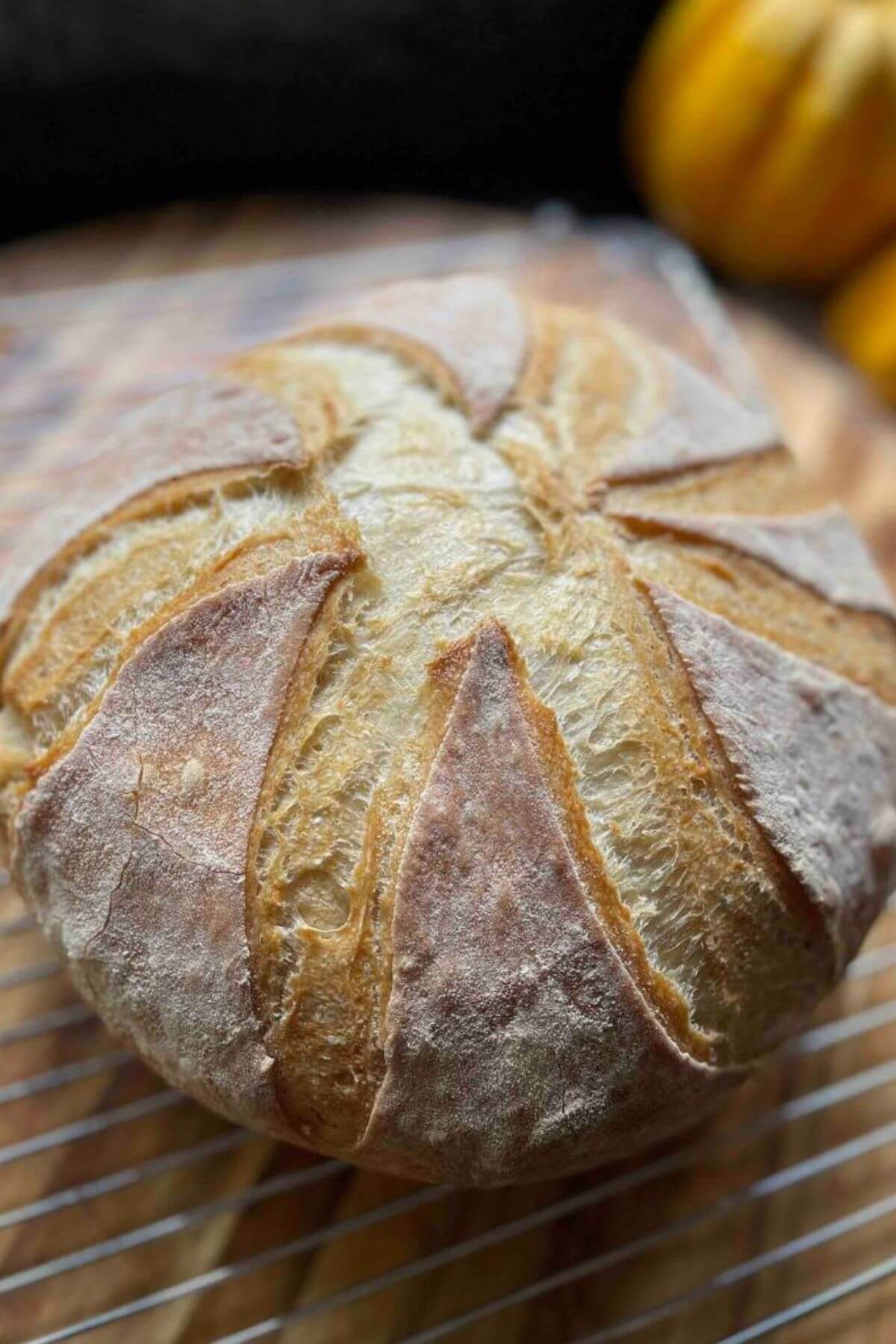
📷 Recipe Snapshot
📌 Recipe: Romanian House Bread (Paine de Casa)
⏲️ Time: 20 minutes prep + 50 minutes bake + 1 hour resting (about 2 hours 10 minutes total)
👥 Serves: 10
🌏 Cuisine: Romanian
💪 Difficulty: Easy to medium
📌 Recipe Type: Homemade bread / rustic loaf / side bread
🌟 Ingredient Highlights: bread flour, warm water, yeast, salt, olive oil
💡 Pro Tip: Place a tray of boiling water in the oven while baking to help create that crisp golden crust with a soft, airy inside.
Jump to:
- 📷 Recipe Snapshot
- 💗 Why You'll Love This Recipe
- 🍞 Ingredients
- ♻️ Substitutions
- 📋 Variations
- 👩🍳How To Make Romanian House Bread
- 💭 Tips and Tricks
- How to Keep Soft Dough Tall While Rising/Baking
- 🥗 Serving Suggestions
- ❓Romanian House Bread FAQs
- If You Enjoyed This Recipe, You Will Love These Too
- 📖 Recipe
- 💬 Comments
Krystle Smith says:
 "The dough was super easy to work with, and the smell while it baked was just amazing. I made it to go with a hearty veggie soup, and it was the perfect combo!"
In Romania, bread is far more than just food; it's a sacred symbol of life and community. This is beautifully captured in the traditional ritual of "Pâinea și Sarea" (Bread and Salt), where guests are welcomed with a fresh loaf and a sprinkle of salt on a traditional embroidered cloth. This gesture signifies a host's wish for prosperity and a heartfelt welcome, making the bread you bake at home a true taste of Romanian warmth and hospitality.
This Romanian house bread recipe takes a little time, but the steps are easy to follow, even if you're new to bread-making. It's the kind of loaf that goes with almost anything-from soup and stews to just a slab of butter and a sprinkle of salt.
In under 2 hours, you'll have a warm homemade bread that feels like it came straight from a countryside bakery. It's especially delicious served alongside a traditional Romanian sour soup with meatballs.
💗 Why You'll Love This Recipe
- Rustic, homemade bread with an authentic Romanian touch
- Simple ingredients you already have in your pantry
- Great for beginners, no fancy skills needed
- Perfect for serving with soups, stews, or just butter and salt
🍞 Ingredients

*See the recipe card for full information on ingredients and quantities.
- Bread flour: Use high-protein bread flour for a strong gluten structure, which helps the loaf rise and keeps it airy yet chewy.
- Warm water: Should be lukewarm (not hot) to activate the yeast properly. Too hot and it kills the yeast; too cold and it won't proof efficiently.
- Yeast: Fresh yeast or dry yeast can be used. Dissolve fresh yeast in the warm water first. Dry yeast can be sprinkled on top of the flour or dissolved in water.
- Salt: Add after the flour is mixed in. Salt controls yeast activity and strengthens the dough. Don't add it directly on top of the yeast, as it can slow fermentation.
- Oil for greasing: Lightly grease the surface and your hands to prevent sticking during kneading, stretching, and folding. No need for exact amounts-just a thin layer.
♻️ Substitutions
- Bread Flour: You can use all-purpose flour, but your bread might be a little less chewy.
- Active Dry Yeast: If you have instant yeast, you can use the same amount and mix it right in with the flour.
- Sea Salt: Table salt works just fine.
📋 Variations
- Herb Bread: Add 2 tablespoons of dried rosemary or thyme to the flour before mixing.
- Seeded Loaf: Before baking, brush the Romanian house bread with water and press your favourite seeds (like sesame or sunflower) onto the top.
👩🍳How To Make Romanian House Bread
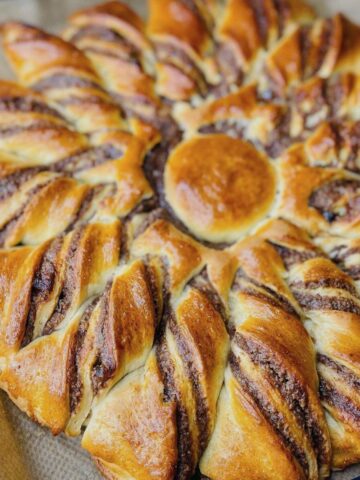
Love the warm, golden crust and fresh-baked aroma? Try my soft pumpkin-shaped bread rolls next! These rustic loaves are easy to make and ideal for breakfast, soups, or sandwiches. Discover more breads in our curated homemade bread recipe collection.
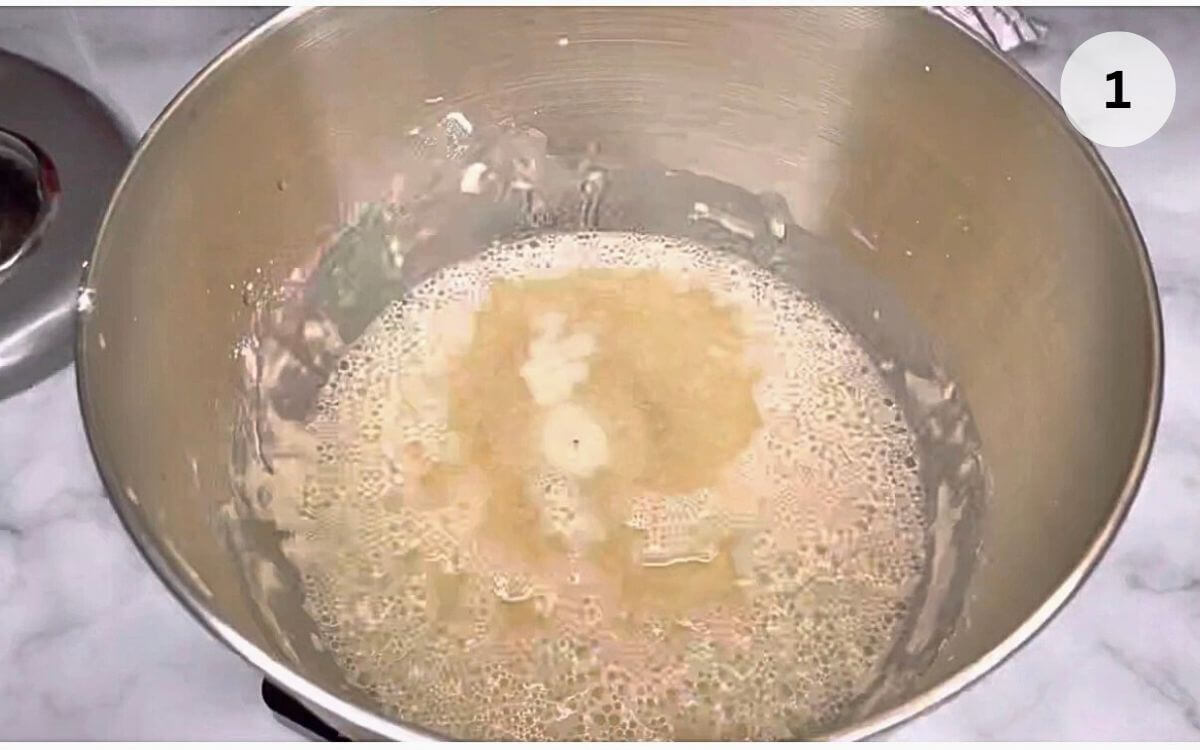
Step 1: In a large bowl, mix warm water, yeast, and a little flour. Whisk and let rest for 10 minutes.
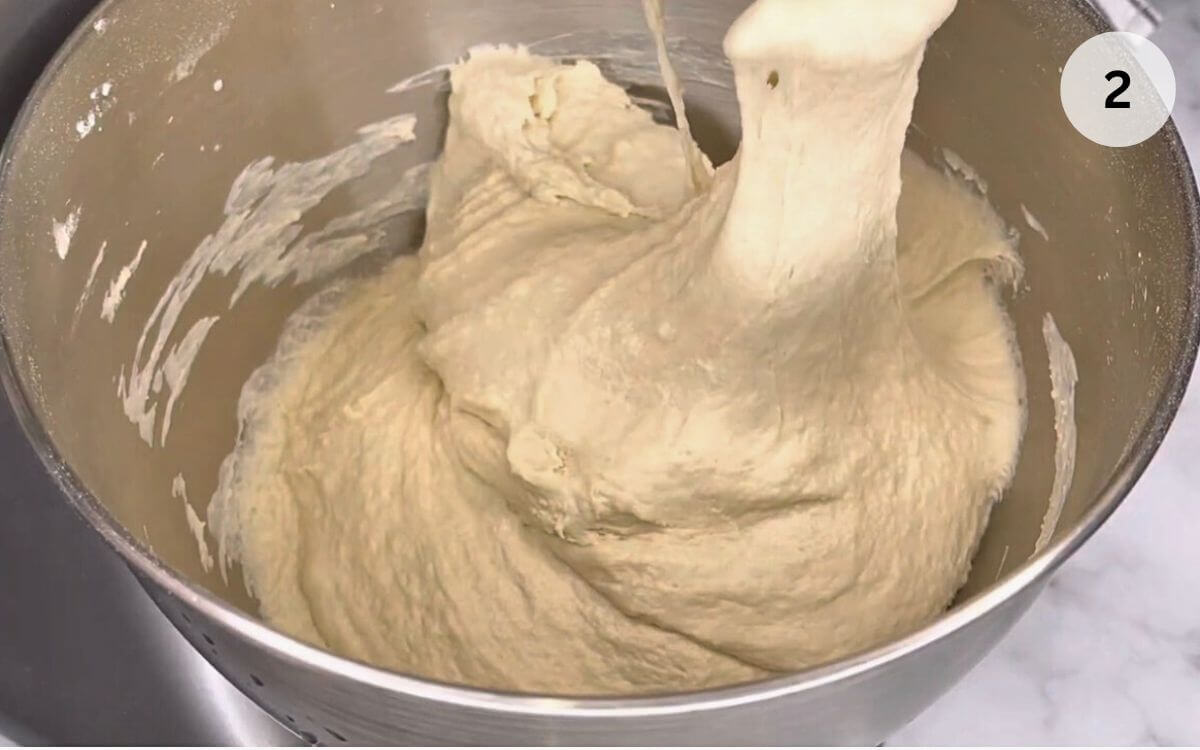
Step 2: Add the remaining flour and salt, and knead for about 5 minutes by hand or in a stand mixer.
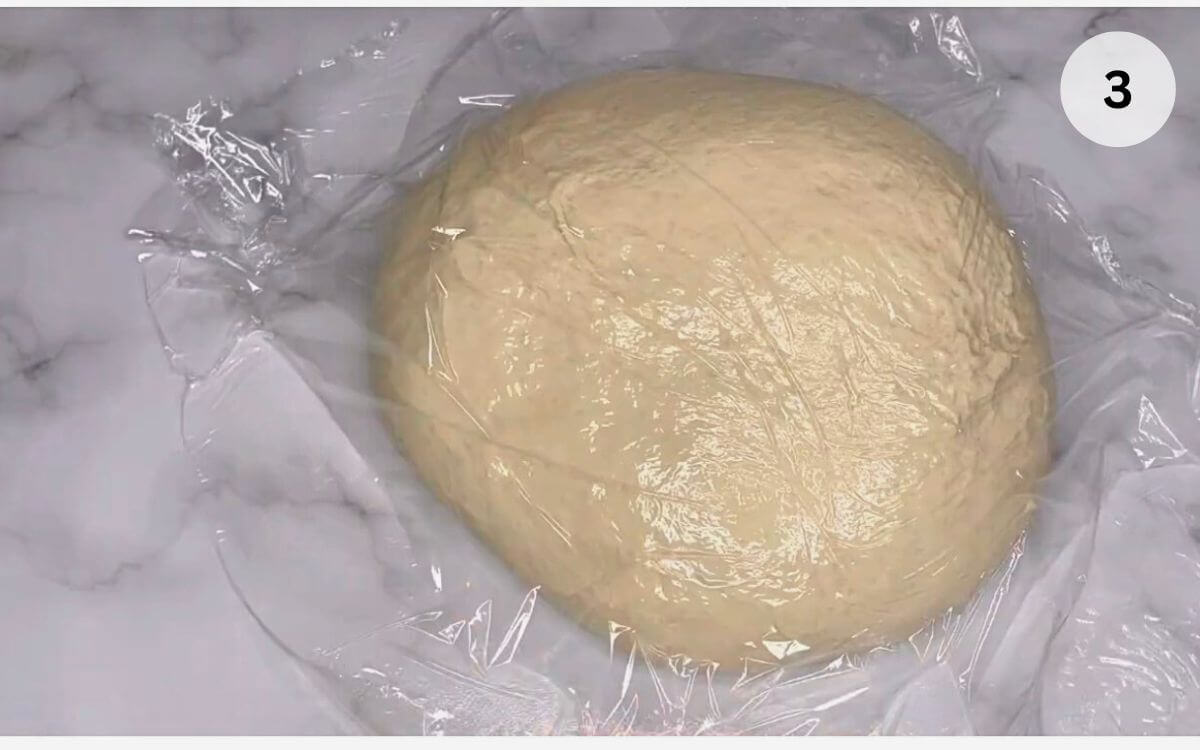
Step 3: Place the dough on a lightly oiled surface. Stretch and fold the edges into the centre, repeat twice, then cover and let rise for 1 hour.
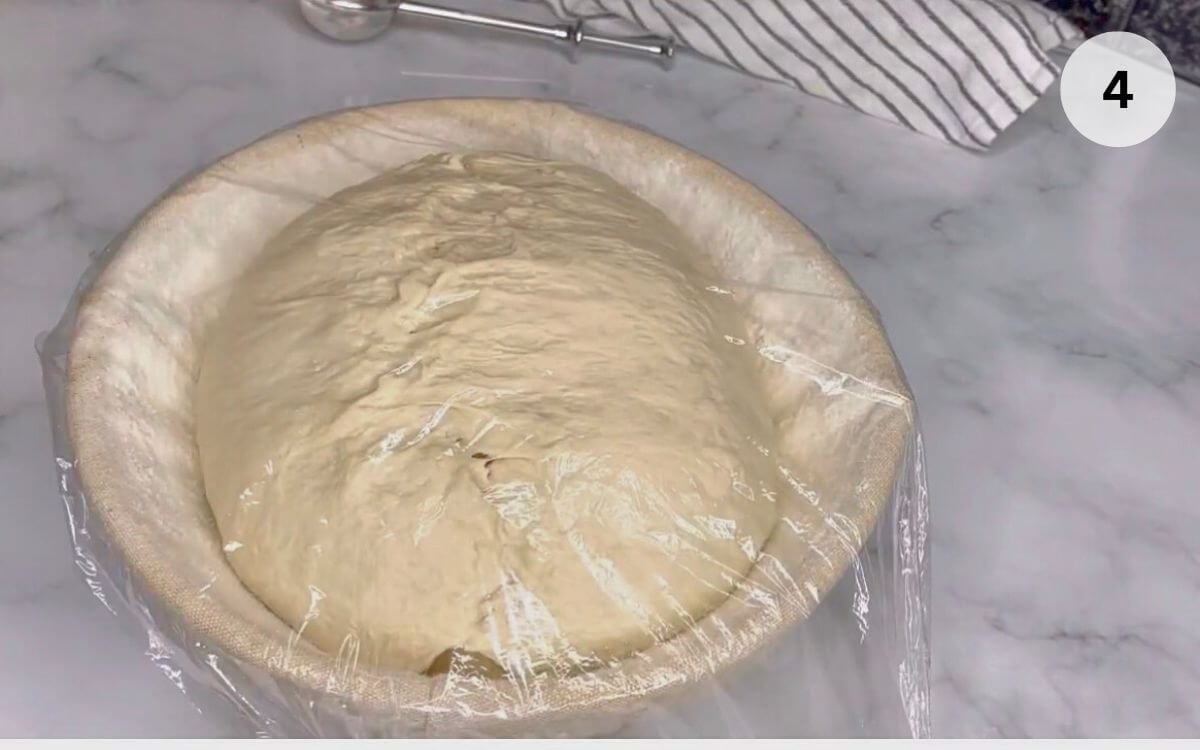
Step 4: Stretch and fold once more, shape into a round or oval loaf, and let it rest for 30 minutes.

Step 5: Preheat the oven to its highest setting and place a tray of boiling water inside for steam. Score the dough, then bake at high heat for 20 minutes.
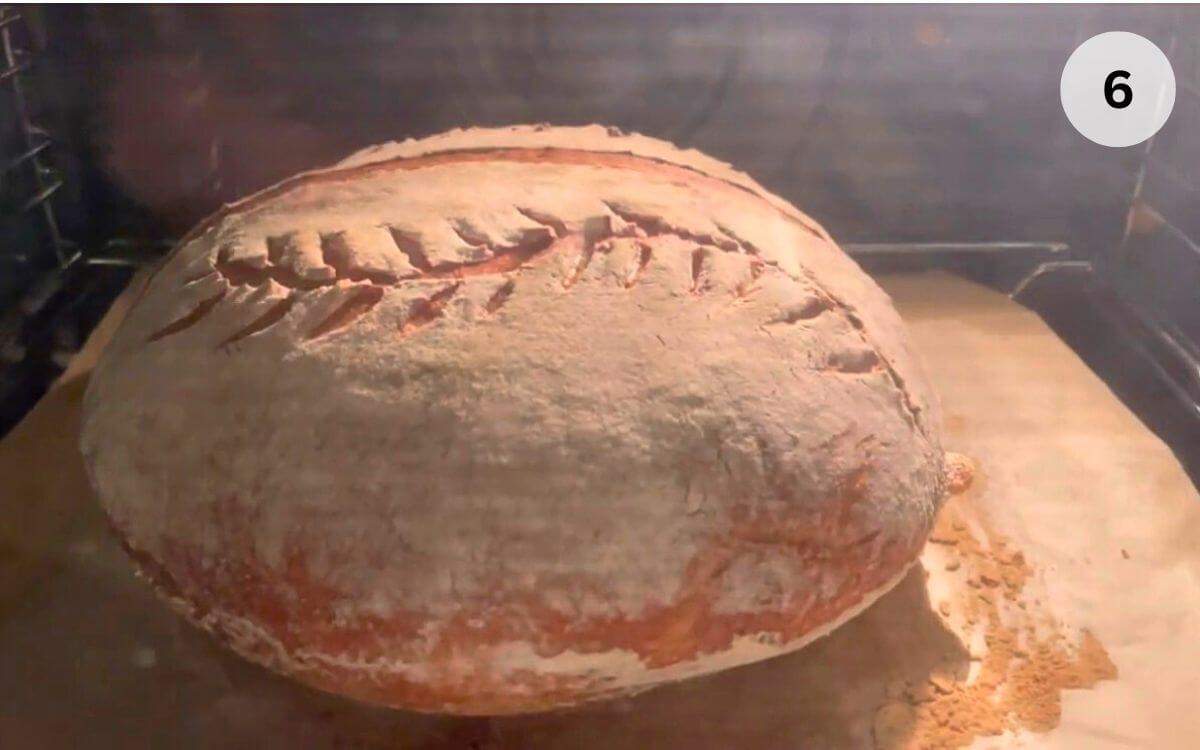
Step 6: Remove the tray of water, lower the oven temperature to 400°F (200°C), and bake for another 25-30 minutes.

Step 7: Cool the bread on a rack.
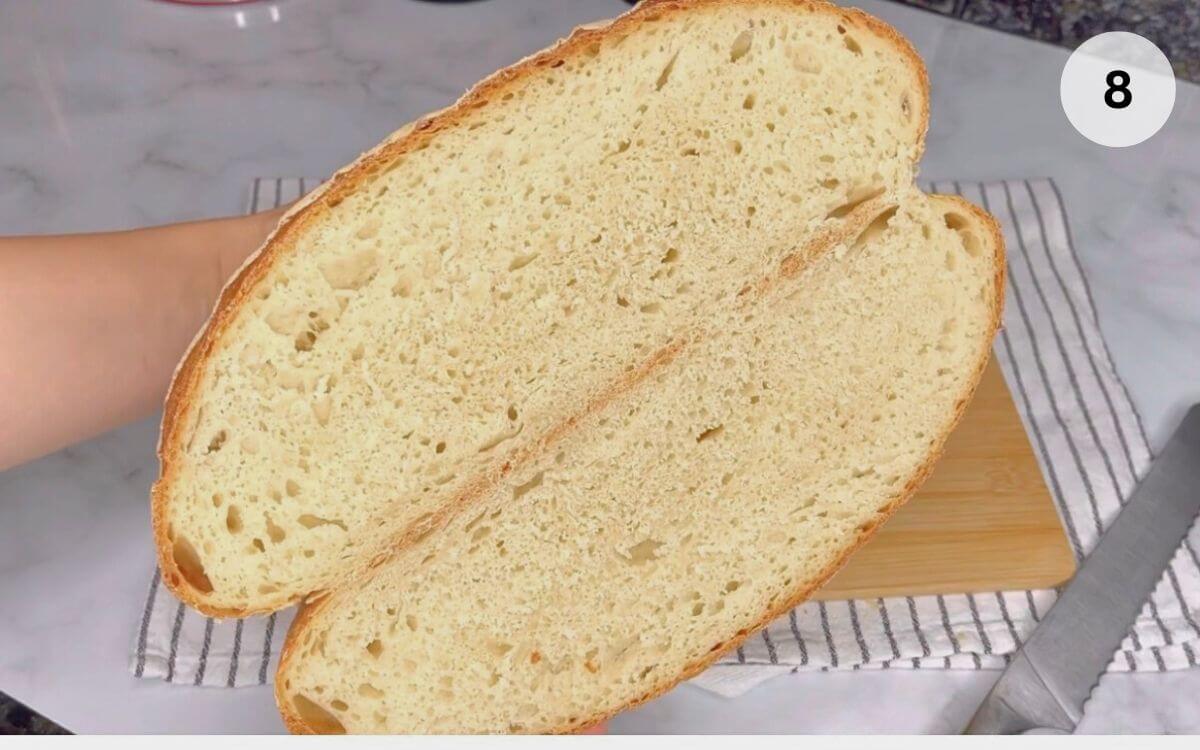
Step 8: Slice the Romanian house bread in half to reveal the inside.
*See the recipe card for detailed instructions.
💭 Tips and Tricks
- Always use warm water, not hot, to keep the yeast active.
- Don't Skip the Steam: The tray of boiling water in the oven is non-negotiable for a professional-looking crust. The steam keeps the dough surface moist, allowing the bread to expand fully before the crust sets. Without it, the crust can become thick and tough.
- Master the 'Stretch and Fold: The technique of stretching and folding the dough (in Steps 3 and 4) is a classic method for building a strong gluten network. This is what helps trap air and creates a better, more open crumb structure in your finished loaf.
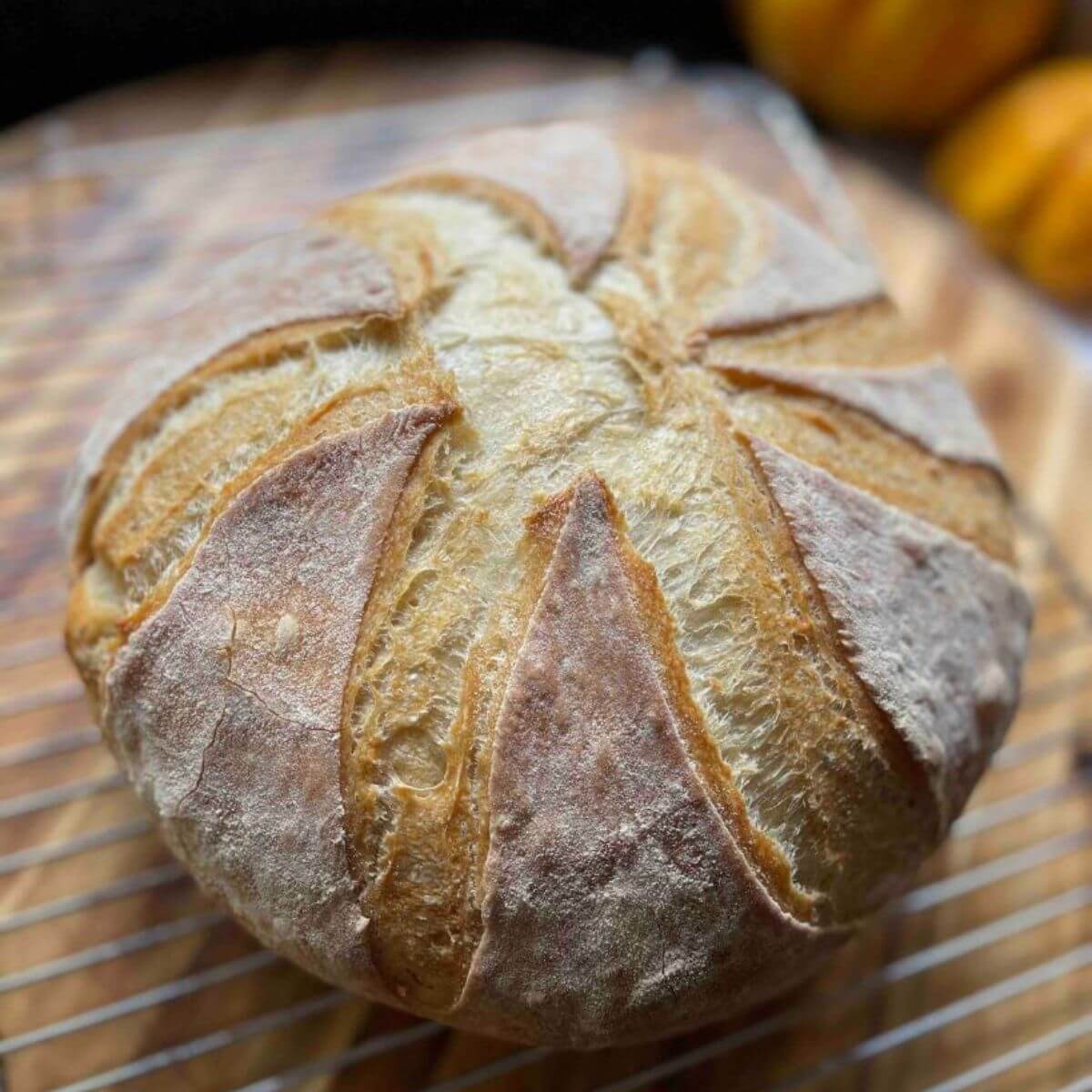
- Score deep enough so the bread expands without cracking.
- For a crisp crust, leave the bread in the oven with the door cracked open for 5 minutes after baking.
How to Keep Soft Dough Tall While Rising/Baking
If your dough is slightly soft or you want to control its shape, try this trick.
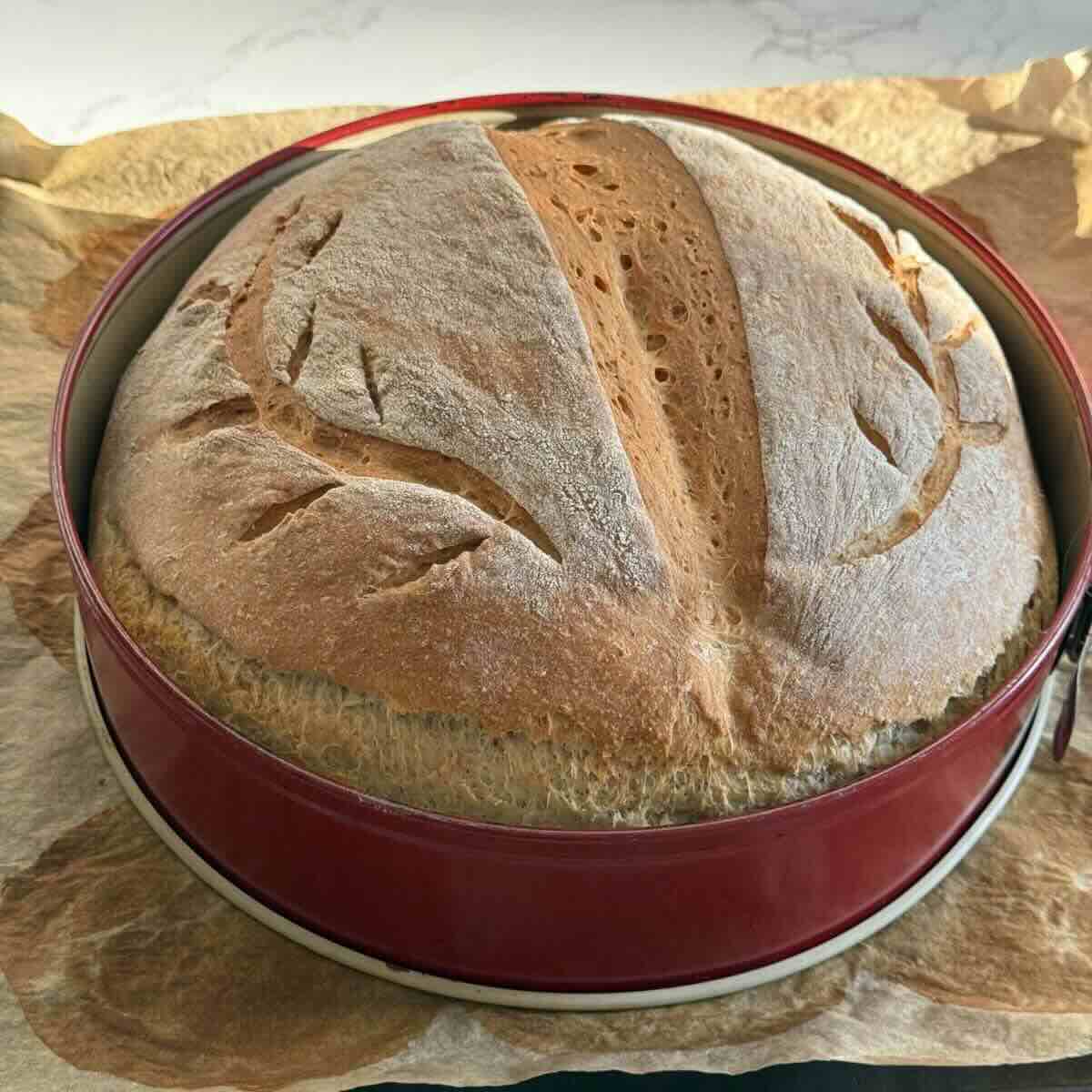
Place a cake ring around the dough before it rises to help it stay tall and keep its volume.
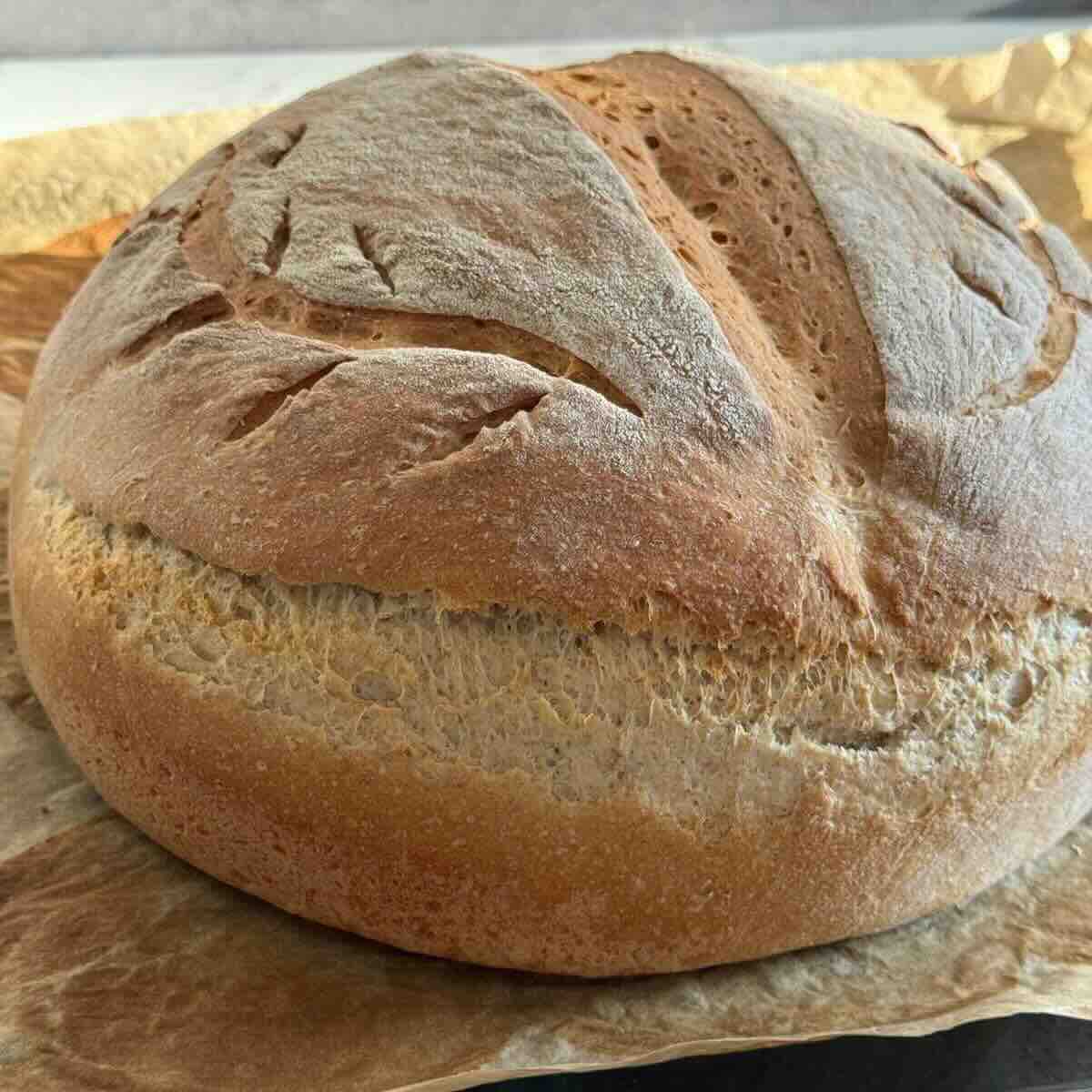
Once the dough has risen, keep the ring around the dough and bake it as usual.
🥗 Serving Suggestions
This Romanian house bread is fantastic, still slightly warm from the oven. Spread a thick layer of butter on it and some coarse salt. It's also perfect for dipping into soups or olive oil. Try it with a hearty bean soup for a complete meal or served with a generous spread of Romanian bean dip.
❓Romanian House Bread FAQs
The secret is a two-part process. First, the steam from the tray of boiling water in the oven is crucial. It keeps the dough surface moist, allowing the bread to expand fully before the crust sets, which results in a crisp, shiny, professional-looking crust. Second, baking at a high initial temperature (like 250°C/480°F) is essential. Baking at low temperatures will dry the bread out and create a thick, tough crust.
This is a key technique for better flavour and texture. We use half the typical yeast to allow for a slightly longer, more flavorful rise. The salt is added after the flour is mixed in because if it comes into direct contact with the yeast at the beginning, it can slow down or even inactivate the fermentation, leading to a denser loaf.
Absolutely! This Romanian house bread is easily made by hand. Knead for 5-7 minutes until smooth. The 'stretch and fold' technique you do during the rise is a gentle way to strengthen the gluten network. Instead of more kneading, you simply stretch the dough and fold it over itself, which helps trap air and creates a better, airier crumb structure in the final loaf.
The most reliable test is the "hollow sound" test. Carefully remove the loaf from the oven (using oven mitts!), turn it over, and tap firmly on the bottom with your knuckles. If it sounds hollow, it is perfectly baked. A dull thud means it needs a few more minutes.
For the best texture, let the Romanian house bread cool completely on a wire rack, then store it wrapped in a clean kitchen towel at room temperature. This preserves the crispy crust. Avoid sealing it in plastic while it's warm, as this will make the crust soft. Serve it slightly warm with butter, or as the perfect companion to soups and stews.
If You Enjoyed This Recipe, You Will Love These Too


Tried this recipe? Give it a star rating below! ⭐⭐⭐⭐⭐
HUNGRY FOR MORE? Subscribe to my newsletter and follow along on Facebook, Pinterest, and Instagram for the latest updates.
📖 Recipe
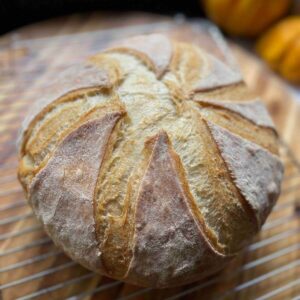
Romanian House Bread (Paine de casa): An Easy Rustic Recipe
Video
Ingredients
- 8 cups bread flour
- 3 cups warm water lukewarm
- 0.9 oz fresh yeast 2 ¼ teaspoon dry yeast (7 g)
- 1 tablespoon salt
- A little oil for greasing
Instructions
- In a large bowl, mix the warm water, yeast, and 2-3 tablespoons of flour. Whisk until smooth and let it rest for 10 minutes. You'll see bubbles forming-this means the yeast is active and ready.3 cups warm water, 0.9 oz fresh yeast
- Add the remaining flour to the bowl. Sprinkle the salt evenly over the flour, then mix until the dough starts coming together. It should feel a little sticky but manageable.8 cups bread flour, 1 tbsp salt
- Knead the dough for 5 minutes, either by hand or with a stand mixer. The dough should be soft, elastic, and slightly tacky to the touch.
- Lightly oil your work surface and hands. Stretch and fold the edges of the dough toward the centre, then repeat this two more times. Add the dough to a bowl, cover with a clean towel or cling film and let the dough rise for 1 hour at room temperature. It should roughly double in size.A little oil for greasing
- Do one more stretch and fold, then shape the dough into a round or oval loaf. You can place it in a rattan proffing basket after dusting it well with flour. Let it rest for 30 minutes to relax the gluten.
- Preheat your oven to its highest temperature, mine is 250℃. Place a tray of boiling water inside to create steam, which will help the bread develop a crisp crust.
- Using a bread scoring knife, score the top of the dough with your favourite pattern and bake at high heat for 20 minutes.
- Carefully remove the tray with water, lower the oven to 400°F (200°C), and bake for another 25-30 minutes until golden brown.
- Cool the Romanian house bread on a wire rack before slicing. Spread with butter and a sprinkle of salt-the simple, homemade taste is incredible!
Explore More with AI
Notes
- Use the right flour: High-protein bread flour works best for structure and chewiness, but all-purpose flour can work if that's what you have.
- Water temperature matters: Lukewarm water activates the yeast without killing it. Avoid hot water.
- Yeast options: Fresh or dry yeast can be used. If using dry yeast, make sure it's active and bubbles form during the initial rest.
- Salt timing: Sprinkle the salt over the flour, not directly on the yeast, to ensure proper fermentation.
- Stretch and fold: This technique strengthens gluten and creates an airy crumb. Don't skip it.
- Steam for the crust: The tray of boiling water in the oven is key for a crisp crust; it traps moisture to let the bread expand before the crust sets.
- Scoring: Make deep enough cuts so the bread can expand without cracking.
- Cooling: Let the Romanian house bread cool completely on a wire rack before slicing to avoid a gummy texture inside.
- Storage: Store at room temperature in a paper bag for 2-3 days, or freeze slices for up to 1 month.
- Serving ideas: Delicious with soups, stews, butter, olive oil, or your favorite spreads.


Hayley says
There is nothing like the smell of this bread baking. The crust came out so perfectly golden! I'll be making often for my family, thanks for the recipe!
Roja says
I agree with you this is an easy bread recipe, I am going to make it again.
Danielle says
I really enjoyed the classic, rustic flavor of this bread. I love no bells and whistles bread with my dishes.
Bill says
This is really good bread. I love simple breads like this that focus on texture and a mild flavor.
Tracy says
I just made this bread and wow. It's so simple and so good. There's something special about homemade bread for breakfast!
Tisha says
This Romanian House Bread recipe is a delight. It promises a crisp exterior, tender crumb, and classic taste that feels straight out of a cozy kitchen.
Nicole says
This is a great bread recipe!! It is pretty easy to follow as well.
Krystle Smith says
I love the little tips on getting the yeast just right and shaping the dough, they really make a difference!
Jet says
This bread looks beautifully rustic. I appreciate how simple the recipe is while still giving that homemade flavor and texture that makes fresh bread so special.
Liz says
My family loved this! It was perfect to serve with the homemade beef and barley soup I made for dinner.
Nicole says
This bread was amazing!! It came out perfectly.
jaleah says
this house bread is incredible!
Raz says
Thank you for sharing this recipe
Krystle Smith says
The dough was super easy to work with, and the smell while it baked was just amazing. I made it to go with a hearty veggie soup, and it was the perfect combo!
Claudia Ciorteanu says
My family loved this!