
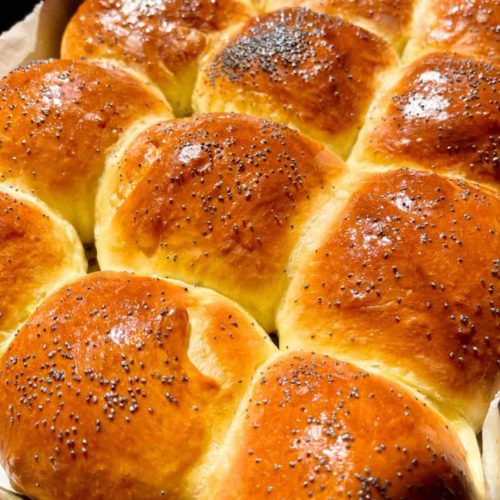
These are the softest hamburger buns I've ever made at home, and the only thing that changes is one extra step: a Tangzhong.
Tangzhong is a Japanese technique where you cook a small amount of flour and liquid into a paste before adding it to the rest of the dough. That's it. It takes three minutes, and it's the reason these buns stay soft two days later instead of going stale by dinner.
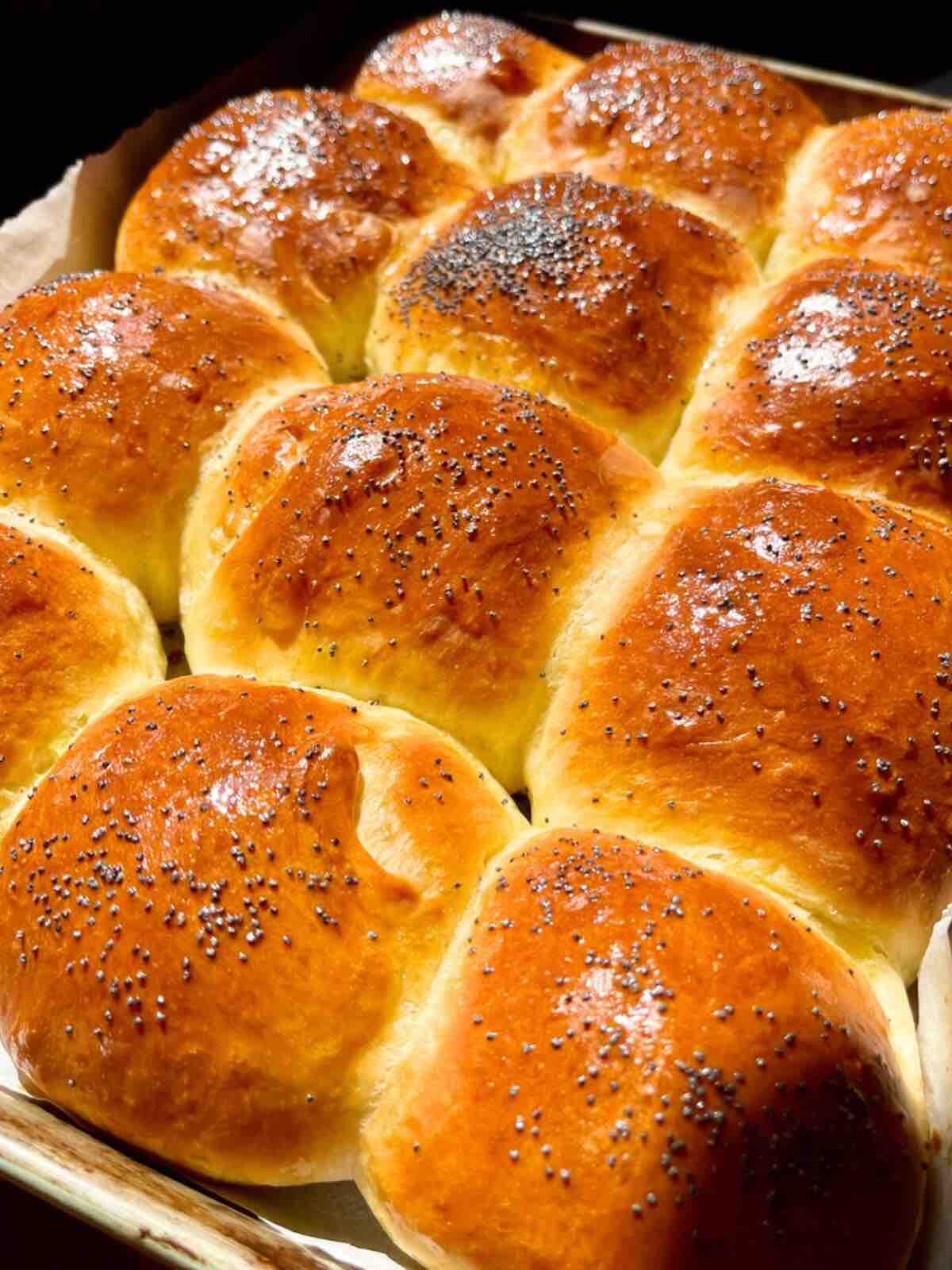
I use these for burgers, pulled pork, and breakfast sandwiches. Toasted, they're also good under a spread like grilled eggplant salad (salata de vinete), or on the side of a bowl of chicken in tomato sauce .
📷 Recipe Snapshot
🍽️ Recipe: Tangzhong Hamburger Buns (Soft Japanese Milk Bread)
⏲️ Ready In: 2 hrs 15 mins
👥 Serves: 12 buns
🌏 Cuisine: Asian
💪 Difficulty: Easy
📌 Recipe Type: Bread / Burger Buns
🌟 Ingredient Highlights: bread flour, milk, instant yeast, butter, egg, sugar, tangzhong, poppy seeds
❤️ Why You'll Love It: Soft, fluffy homemade burger buns made with the Japanese tangzhong method that stay fresh for days and hold up well to burgers, pulled pork, and sandwiches.
💡 Summarize and save this recipe on
These soft buns are the perfect match for any sandwich, they'll take your summer BBQS to a new level. Whether filling them with garlic-rosemary lamb, crunchy German-style schnitzel, or juicy homemade burgers, they'll hold everything together beautifully.
Or even enjoy them dipped in a comforting roasted vegetable soup. They're versatile enough for any meal!
Jump to:
- 📷 Recipe Snapshot
- 💡 Summarize and save this recipe on
- What Is Tangzhong?
- 🔍 Why This Recipe Works
- 🥘 Ingredients
- ♻️ Substitutes & Variations
- 👩🍳 How To Make Japanese Milk Bread Buns
- Claudia's top Tips
- Common Mistakes
- Storage and Reheating
- What to Serve With Tangzhong Hamburger Buns
- ❓ Japanese Milk Bread Dinner Rolls FAQs
- More Bread Recipes You'll Love
- 📖 Recipe
- 💬 Comments
What Is Tangzhong?
Tangzhong is a paste made from flour and liquid, cooked together until it thickens, then cooled and mixed into bread dough. Cooking the flour first pre-gelatinizes its starch, which means the dough can hold onto more moisture during baking.
The result is bread that's softer the day you bake it and still soft two or three days later. It's a standard technique in Japanese and Chinese bakeries, and it works with both regular and gluten-free flour.
🔍 Why This Recipe Works
I tested this recipe against a plain, no-tangzhong version side by side. The tangzhong batch was noticeably softer on day one, and by day three the plain batch had gone dry while the tangzhong buns were still good.
A few other things make this version reliable:
- You can freeze the shaped, unbaked dough balls and bake straight from frozen, so you don't need to make a full batch every time.
- The dough comes together in one bowl with a stand mixer, or by hand if you don't have one.
- Weighing the flour instead of using cups is the single biggest factor in whether these turn out light or dense - measuring by volume can be off by up to 30%.
🥘 Ingredients
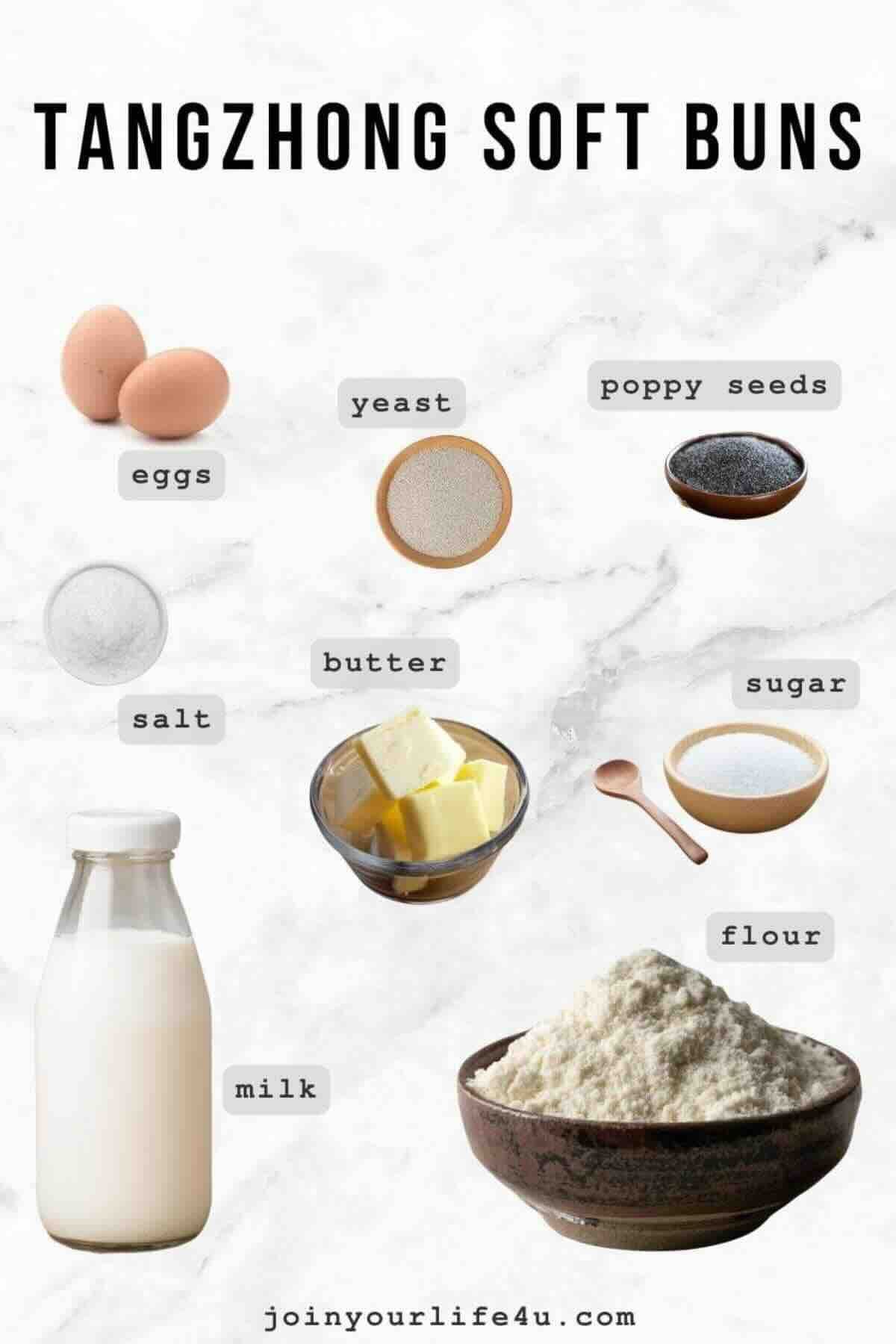
*See the recipe card for full information on ingredients and quantities.
- Bread flour - the higher protein content (look for 12-13%) gives the dough enough structure to stay tall once shaped. All-purpose flour works too, but the buns will be slightly flatter.
- Instant yeast - fast and doesn't need to be proofed separately, though the recipe card below gives amounts for active dry and fresh yeast as well.
- Milk - both in the tangzhong and in the dough itself, for a softer crumb than a water-based dough.
- Egg - one in the dough, one for the egg wash.
- Butter - melted into the dough, then brushed on again after baking for shine.
- Poppy seeds - optional, for the top. Sesame, sunflower, or a plain top all work.
♻️ Substitutes & Variations
- Dairy-free: swap the milk for almond, soy, or oat milk, and use a dairy-free butter or margarine.
- Gluten-free: use a 1:1 gluten-free flour blend and add 1 teaspoon of xanthan gum. Texture will be a little different but still soft.
- Sugar: honey, maple syrup, or agave all work in place of granulated sugar.
- Topping: sesame, sunflower, flax, or chia seeds instead of poppy seeds - or leave plain.
👩🍳 How To Make Japanese Milk Bread Buns
Find your next project with our recipe for classic Romanian house bread.
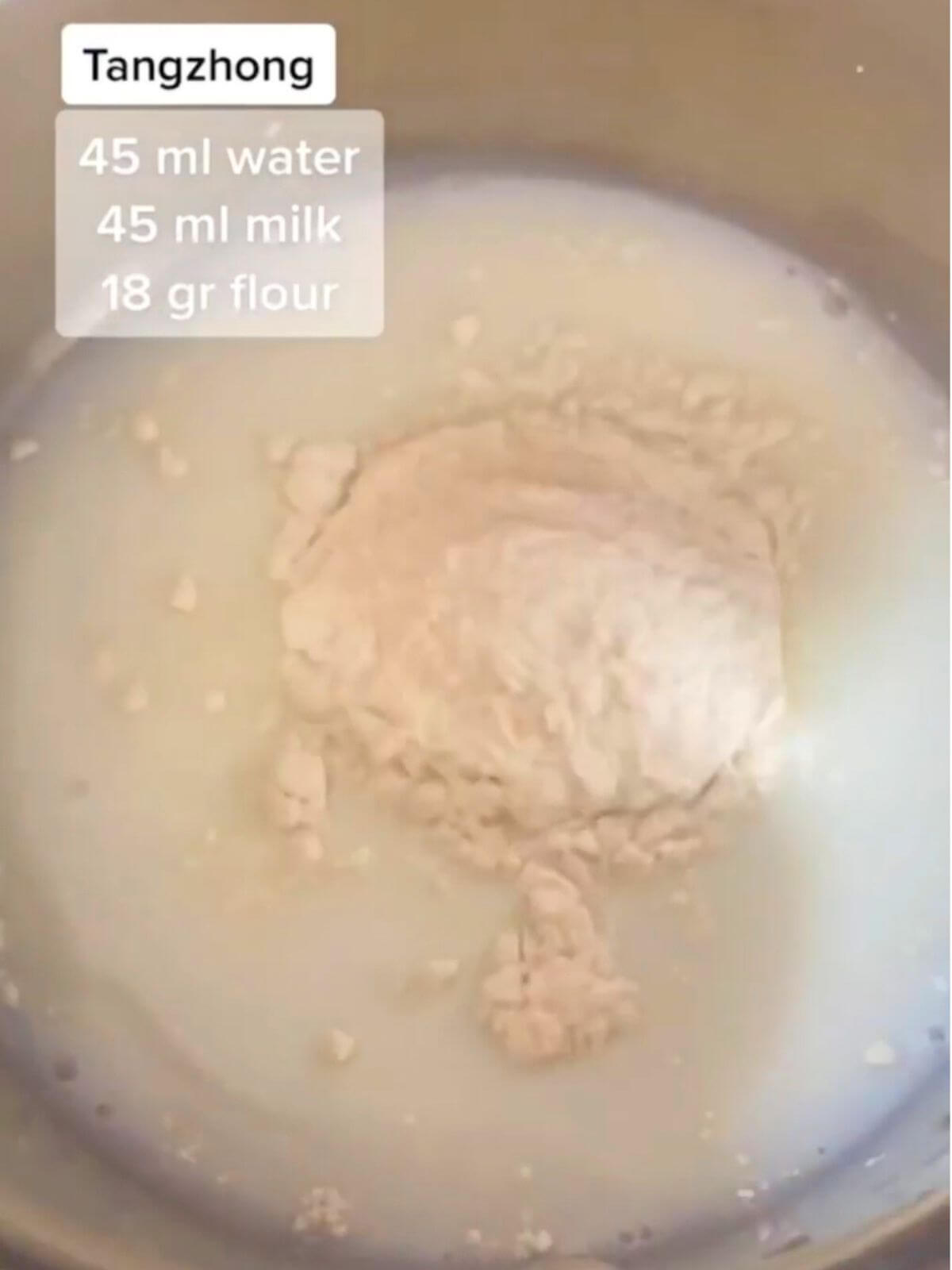
Step 1: Make the tangzhong. Combine the water, milk, and flour in a small saucepan. Stir over medium heat until it thickens into a smooth paste. Set aside to cool.
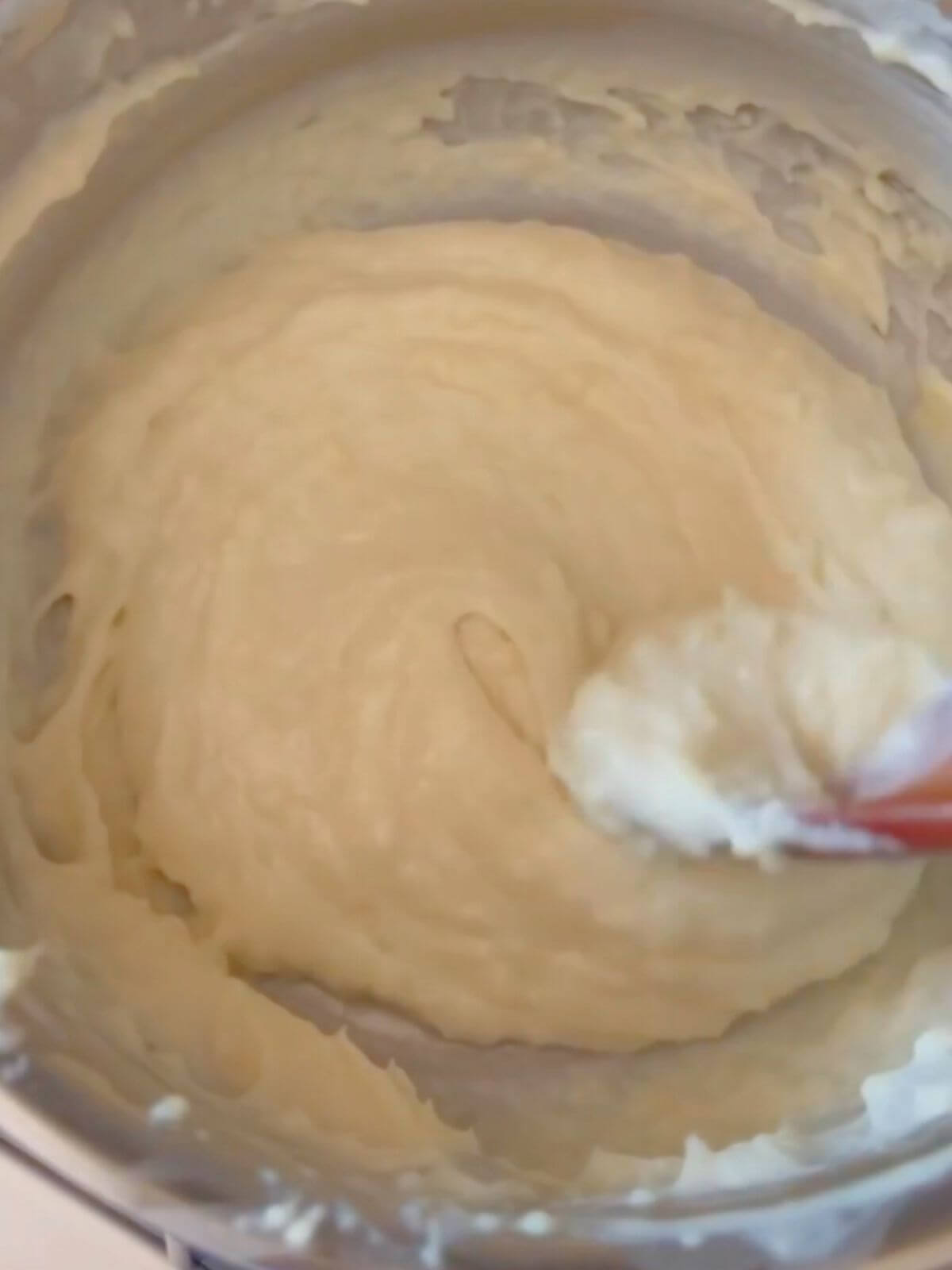
Step 2: Activate the yeast. Whisk together lukewarm milk, sugar, and yeast in a large bowl. Let it sit until foamy, then stir in the egg and melted butter.
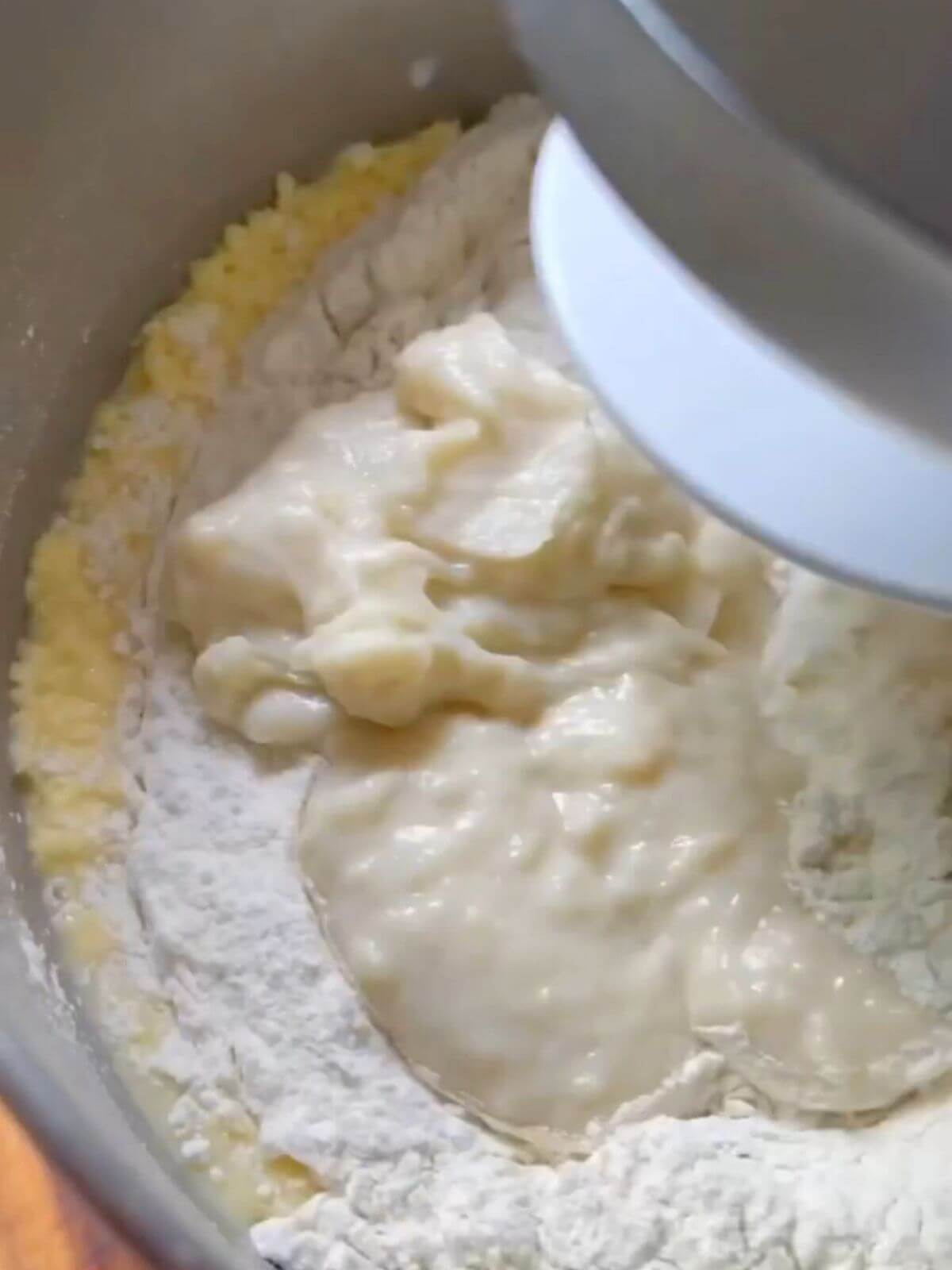
Step 3: Bring the dough together. Add the bread flour, salt, and cooled tangzhong. Mix until combined - the dough will look shaggy at this point, which is normal.
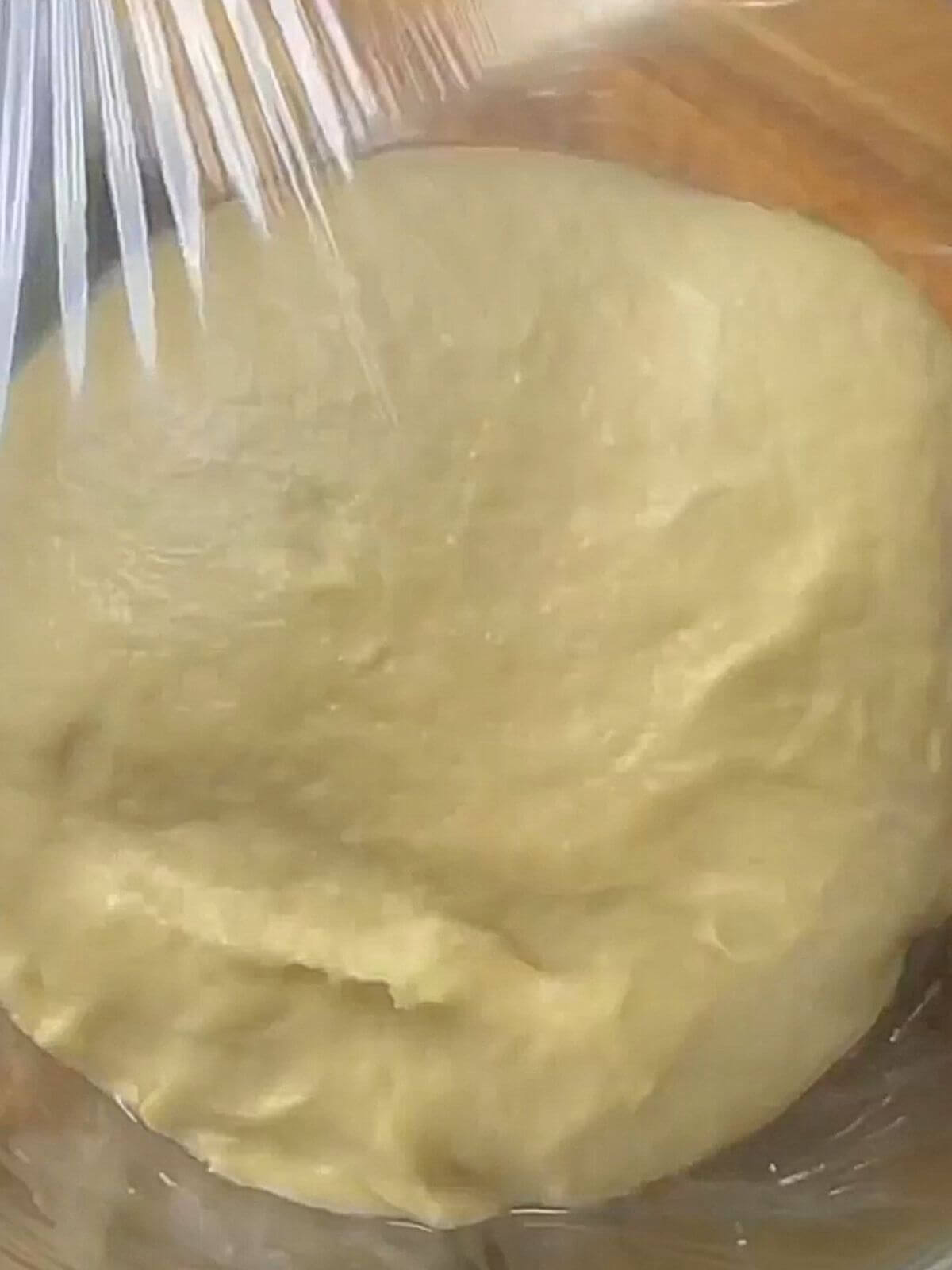
Step 4: Knead and proof. Knead for about 5 minutes, by hand or with a dough hook, until smooth and elastic. Cover and let rise for 60 minutes, until doubled.
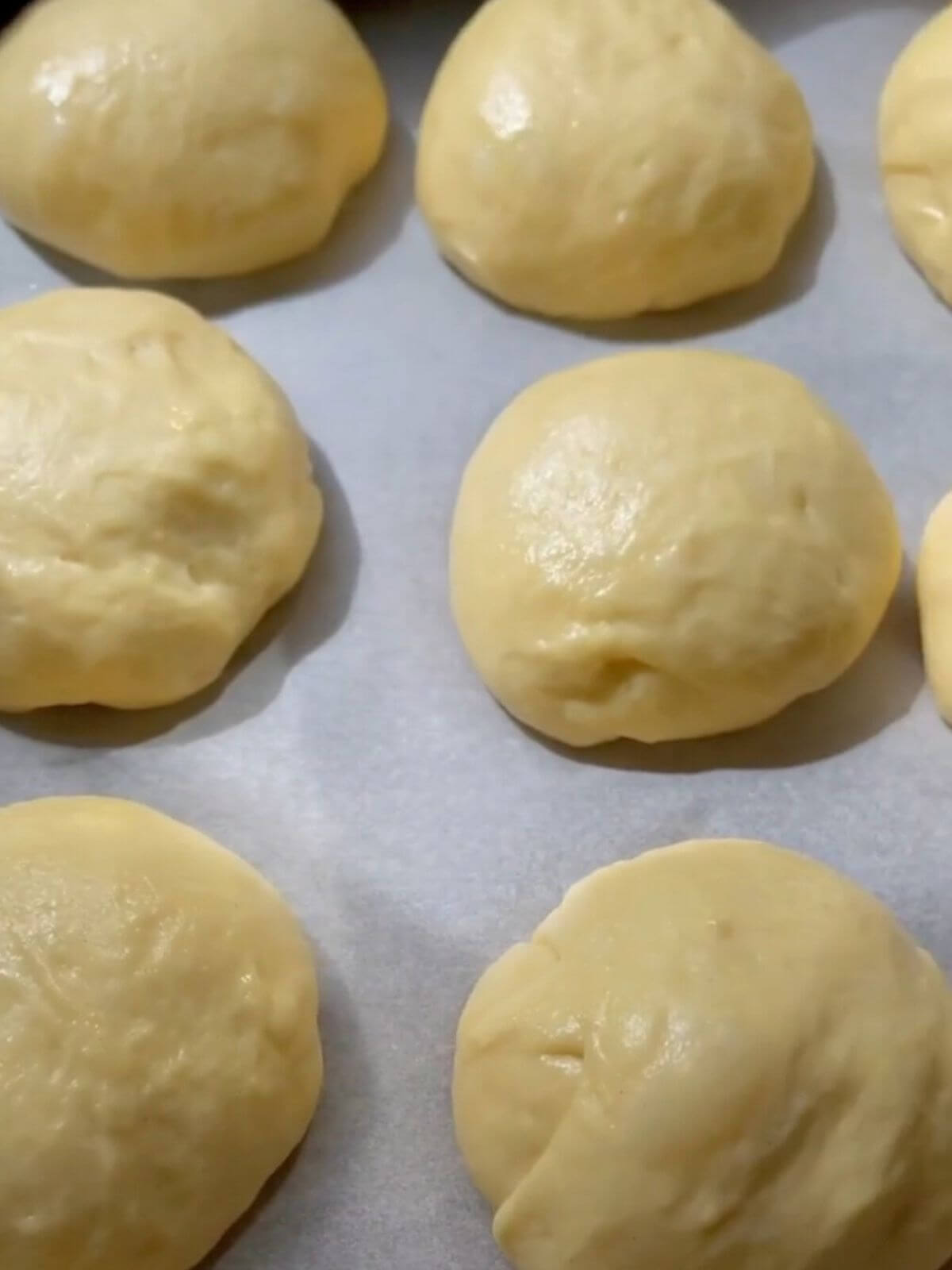
Step 5: Shape. Punch down the dough, divide into 12 pieces (about 100g each), and shape into round balls. Space them out on a parchment-lined tray, cover, and let proof for another 30 minutes.
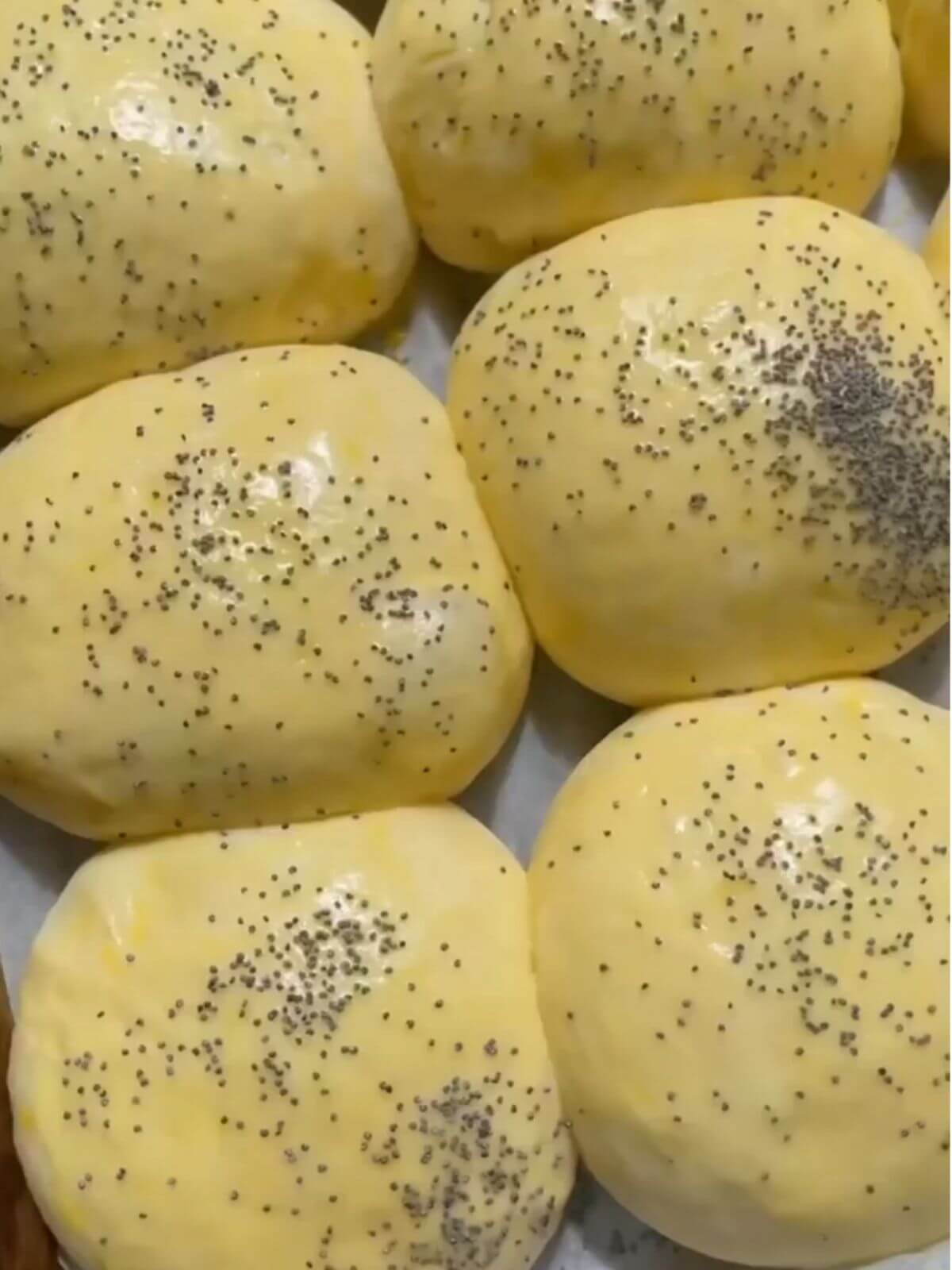
Step 6: Bake. Preheat the oven to 190°C (375°F). Brush the risen buns with egg wash, sprinkle with poppy seeds, and bake for about 25 minutes until golden.

Step 7: Finish. Brush the warm buns with melted butter. Let them cool slightly before slicing.
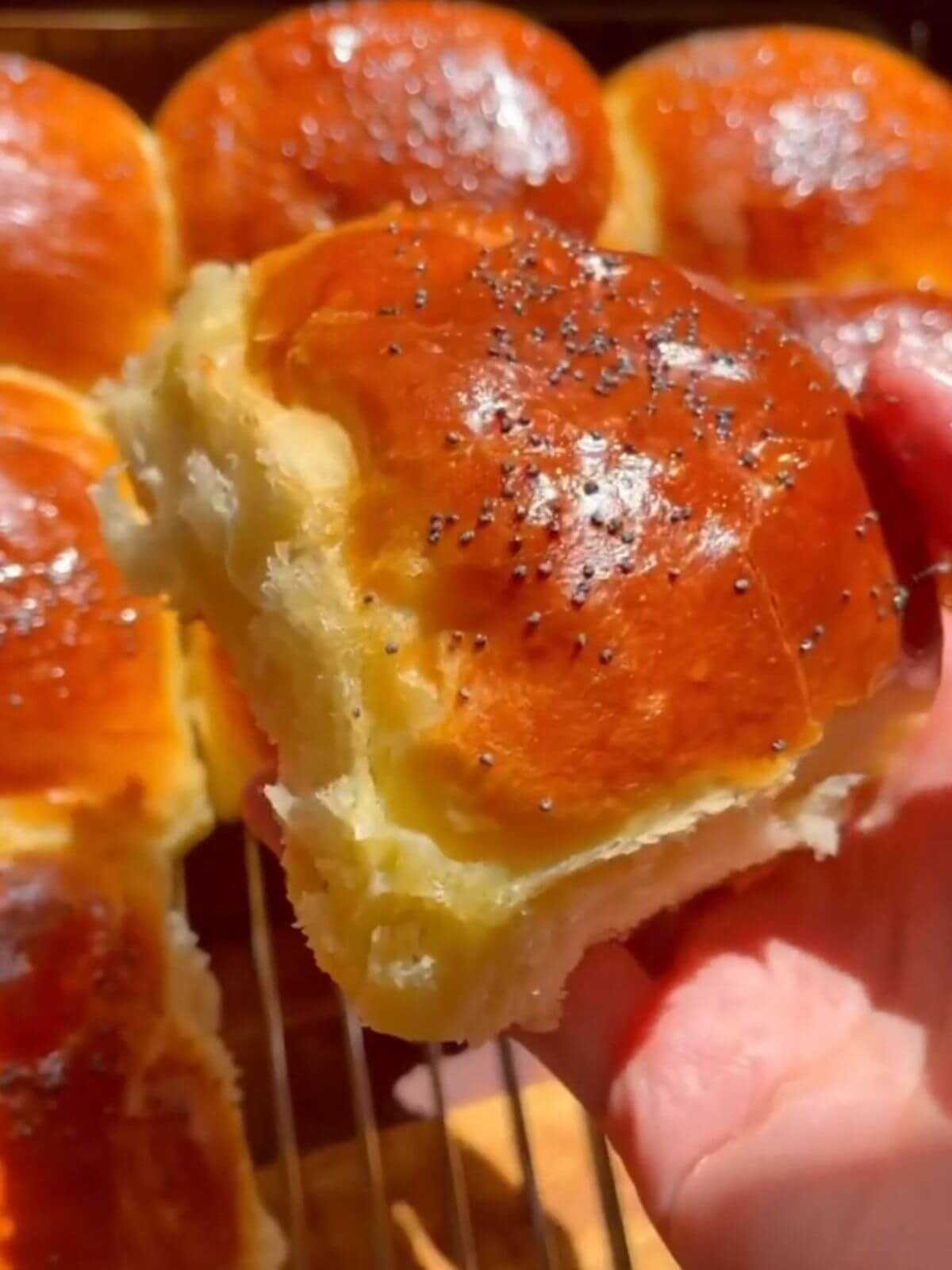
Step 8: They're perfect on their own or as a base for baked beef burgers or quinoa and bean patties, pulled pork, breakfast sandwiches, soups, stews, or spreads.
*See the recipe card for detailed instructions.
Claudia's top Tips
- Weigh the flour instead of using cups. This is the single biggest factor in whether these turn out light or dense - measuring by volume can be off by up to 30%.
- Freeze the shaped dough for later. I shape a double batch, freeze half of the balls on a tray, then transfer them to a bag once solid. They go straight into a cold oven from frozen, adding about 5 minutes to the bake time.
- Don't skip the tangzhong even if you're short on time. It only takes five minutes, and it's the difference between buns that are still soft on day three and buns that are already going dry by day two.
Common Mistakes
- Skipping the tangzhong. You'll still get a decent bun, but it goes stale noticeably faster - by day two it's already firmer than the tangzhong version is on day three.
- Over-measuring the flour. This is the most common reason these come out dense. If you don't have a scale, spoon the flour into the measuring cup and level it off rather than scooping directly from the bag.
- Milk that's too hot, or expired yeast. If the dough isn't rising, it's almost always one of these two. Milk should feel lukewarm, not warm-to-hot, on your wrist.
- Overbaking. The buns are done as soon as they're golden brown and sound hollow when tapped - a minute too long and they dry out fast.
Storage and Reheating
- Room temperature: store in a sealed bag or container for up to 3 days. Thanks to the tangzhong, they stay soft without needing to be reheated.
- Freezer: baked buns freeze well for up to 2 months. Wrap individually and thaw at room temperature, or a few seconds in the microwave.
- Refreshing a day-old bun: wrap loosely in foil and warm in a 150°C (300°F) oven for 5 minutes, or 10-15 seconds in the microwave.
What to Serve With Tangzhong Hamburger Buns
These hold up well to juicy fillings without falling apart, which makes them good for:
- Oven-Baked Burgers, or a quinoa and bean patty
- Pulled pork, or shredded Lemon Chicken
- Breakfast sandwiches with egg and cheese
- Toasted, as a base for grilled eggplant salad (salată de vinete)
- On the side of a bowl of chicken in tomato sauce or a roasted vegetable soup
❓ Japanese Milk Bread Dinner Rolls FAQs
It's a technique where you cook a portion of the flour and liquid from a bread recipe into a thick paste before mixing it into the rest of the dough. The pre-cooked starch holds more moisture, which keeps the finished bread softer for longer.
Cooking the flour and liquid together gelatinizes the starch, so it can absorb and retain more water than raw flour can. That extra moisture is what makes the crumb soft and keeps the bread from drying out as quickly.
Yes. A common ratio is to take about 5-10% of the total flour and liquid in a recipe, cook it into a paste, and mix it back in with the rest of the ingredients. You may need to reduce the remaining liquid slightly since the tangzhong itself carries some.
Yes, all-purpose flour works fine for the tangzhong paste even if the rest of your dough uses bread flour.
It works especially well in enriched, soft breads like burger buns, milk bread, and dinner rolls. It's less commonly used in lean, crusty breads like baguettes, where a chewy, open crumb is the goal rather than a soft one.
More Bread Recipes You'll Love

Tried this recipe? Give it a star rating below! ⭐⭐⭐⭐⭐
HUNGRY FOR MORE? Subscribe to my newsletter and follow along on Facebook, Pinterest, and Instagram for the latest updates.
📖 Recipe
Tangzhong Hamburger Buns (Soft Japanese Milk Bread)
Video
Equipment
- 1 baking pan (29x39 cm / 12x16 inch)
- 1 stand mixer with a dough hook optional
Ingredients
For the tangzhong:
- 3 tablespoons water
- 3 tablespoons milk
- ⅓ cup bread flour
For the dough:
- 2.5 cups bread flour
- 1.25 teaspoon instant yeast or 2.25 teaspoon active dry yeast (7 g), or 0.6 oz fresh yeast (14 g)
- 1.5 tablespoons sugar
- 1.25 teaspoons salt
- 2.5 tablespoons soft or melted unsalted butter
- Tangzhong mixture from above
- ½ cup + 2 tablespoons lukewarm milk
- 1 large egg
- 1 tablespoon poppy seeds to sprinkle
For the egg wash:
- 1 egg
- 1 tablespoon milk
Instructions
- Combine the water, milk, and flour for the tangzhong in a small saucepan. Stir continuously over medium heat until a smooth paste forms. Set aside to cool.3 tablespoons water, 3 tablespoons milk, ⅓ cup bread flour
- In a large bowl, whisk together the lukewarm milk, sugar, and yeast. Let sit until foamy, then stir in the egg and melted butter.1.25 tsp instant yeast, 1.5 tablespoons sugar, ½ cup + 2 tablespoons lukewarm milk, 1 large egg, 2.5 tablespoons soft or melted unsalted butter
- Mix in the bread flour, salt, and cooled tangzhong. The dough will look shaggy - that's normal.2.5 cups bread flour, 1.25 teaspoons salt, Tangzhong mixture
- Knead on a floured surface (or with a stand mixer) for about 5 minutes, until smooth and elastic. Place in a greased bowl, cover, and let proof for 60 minutes until doubled.
- Punch down the dough and divide into 12 pieces (about 100g each). Shape into balls and place on a parchment-lined tray. Cover and proof for another 30 minutes.
- Preheat the oven to 190°C (375°F). Whisk the egg wash ingredients together, brush over the dough balls, sprinkle with poppy seeds, and bake for about 25 minutes until golden brown.1 egg, 1 tablespoon milk, 1 tablespoon poppy seeds
- Brush the warm buns with melted butter for extra shine, if you like - this step is optional. Let cool slightly before serving.
Notes
- Make sure the tangzhong is smooth and lump-free before it cools - lumps won't work out in the dough later.
- Knead until the dough is genuinely smooth and elastic; under-kneaded dough gives denser buns.
- Proof somewhere warm and draft-free, and keep the dough covered so it doesn't dry out.
- Keep the shaped balls a uniform size so they bake evenly.
- The buns are done when golden brown and hollow-sounding when tapped on the bottom - pull them a minute early if you're unsure, since overbaking dries them out fast.

Jewels says
Excellent recipe!
Claudia-Cristina Ciorteanu says
Thank you!
Leah says
These dinner rolls are soo so good! Yummm
Claudia Ciorteanu says
Yay! I’m so glad you loved them — those Japanese milk bread buns are definitely soft, fluffy, and perfect for burgers!
Nicole says
These milk bread dinner rolls are so good!!
Claudia Ciorteanu says
I’m thrilled you enjoyed them! They really are soft, fluffy, and just melt in your mouth.
Ashley says
Oh my heavens these turned out so great! Soft, sweet, just delicious!
Claudia Ciorteanu says
Yay! I’m so happy they turned out perfectly — soft, sweet, and delicious is exactly what I love about them too!
Lora says
These look absolutely incredible—so fluffy and golden! I can already imagine how amazing they’d be with a juicy burger hot off the grill.
Claudia Ciorteanu says
Thank you! They really do pair perfectly with a juicy burger — soft, fluffy, and golden every time!
Ieva says
The best. So soft and fluffy. Perfect with both sweet and savoury pairings. 10 out of 10.
Claudia Ciorteanu says
I’m so glad you think so! They really are that soft and fluffy, and so versatile for both sweet and savory treats.
Ellen says
Had to leave a comment - Soft WONDERFUL BUNS. Just finished baking and the house smells so good. Took one to the face immediately with a burger, mayo and cheese. Perfection and easy too. Thank you bunches.
Claudia Ciorteanu says
That’s amazing to hear! I love that you dug in right away — soft, fluffy buns with a burger are pure perfection. So glad they were easy and delicious for you!
Claudia Ciorteanu says
My family loved this!
Juyali says
I love your recipes and I am bookmarking this one for Thanksgiving. I can't wait to make them for our family. I'll let you know how it goes! 😊
Claudia Ciorteanu says
Thank you so much! I’m so glad you’re excited to try them — can’t wait to hear how your family enjoys them!
Swathi says
Burger buns is delicious I like your recipe, perfect with homemade burger.
Claudia Ciorteanu says
I’m so happy you enjoyed them! They really do make homemade burgers taste even better.
Tisha says
These buns took our cook out to a new level. Recipe was so easy to follow.
Claudia Ciorteanu says
That’s wonderful to hear! I’m so glad the recipe was easy to follow and that it elevated your cooking — soft, fluffy buns really make a difference!
Nora says
Super fluffy and delicious! The perfect buns for us! Thanks!
Claudia Ciorteanu says
Yay! I’m so happy they turned out perfectly — soft, fluffy buns always hit the spot!
nancy says
nothing like fresh burger buns to complete my sandwich! These buns are so soft and moist, that we've stopped buying
Claudia Ciorteanu says
Exactly! Fresh homemade buns make such a difference — soft, moist, and way better than store-bought!
Bobbie says
Love it. Can't wait to try it.
Claudia Ciorteanu says
That’s great! I hope you enjoy it as much as I do when you try it!
Razvan C says
Healthy, fluffy and tasty buns! 🙏🏻
Claudia Ciorteanu says
So glad you think so! Healthy and fluffy buns that actually taste amazing are always a win.